

Enclosed auto transport costs 21.3% to 38.9% more than open transport, depending on distance, and 37.3% more on any move over 2,000 miles. You're paying for a trailer that carries 1-6 cars instead of 7-10, full protection from weather and road debris, and higher cargo coverage. SGT ships enclosed nationwide, and no payment is taken until a carrier is assigned.
How much does enclosed auto transport cost?
Enclosed transport costs 21.3% to 38.9% more than open, depending on distance. Open transport costs $450- $800 up to 499 miles and $1,475- $2,000 beyond 3,000 miles, and enclosed adds 37.3% on any move over 2,000 miles. The premium reflects fewer enclosed carriers and fewer cars per load.
Enclosed vs. open: the real difference
| Distance | Open price | Per mile | Enclosed premium | Transit |
|---|---|---|---|---|
| 100 - 499 mi | $450 - $800 | $1.50 - $2.67 | 21.3% | Up to 1 day |
| 500 - 999 mi | $725 - $1,150 | $0.97 - $1.53 | 28.0% | 1 to 2 days |
| 1,000 - 1,499 mi | $900 - $1,425 | $0.72 - $1.14 | 34.1% | 2 to 3 days |
| 1,500 - 1,999 mi | $1,075 - $1,625 | $0.61 - $0.93 | 38.9% | 3 to 4 days |
| 2,000 - 2,499 mi | $1,225 - $1,775 | $0.54 - $0.79 | 37.3% | 4 to 5 days |
| 2,500 - 2,999 mi | $1,325 - $1,900 | $0.48 - $0.69 | 37.3% | 5 to 7 days |
| 3,000+ mi | $1,475 - $2,000 | $0.46 - $0.62 | 37.3% | 7 to 10 days |
Why enclosed costs more
Enclosed costs more because the trailer carries one to six cars instead of seven to ten, uses more expensive equipment, and requires higher insurance coverage.
- Fewer cars per load. The cost of the trip is shared between fewer customers, which is the single biggest reason for the difference.
- More expensive equipment. Hard-side and soft-side enclosed trailers cost considerably more to buy and run than open decks, and hydraulic lift gates, air-ride suspension, and soft strap systems add to that.
- Higher insurance. Enclosed carriers hold higher cargo coverage because they move higher-value vehicles, and that cost is reflected in the rate.
- Limited capacity. There are far fewer enclosed trailers on the road, so demand consistently outstrips supply on most lanes.
What changes your price
Distance. The largest factor. The per-mile rate falls as distance rises, from $1.50- $2.67 on open runs under 500 miles to $0.46-$0.62 beyond 3,000 miles, with the enclosed premium applied on top.
Vehicle size and weight. Larger vehicles take more space on a trailer that already carries fewer cars. Expect $50 to $625 more for a full-size SUV or pickup.
Running condition. A non-running vehicle needs winch loading and a suitably equipped carrier, adding $150- $250.
Time of year. Auction season, spring and summer show season, and the snowbird runs all concentrate enclosed demand into a few weeks.
Date flexibility. A wide pickup window lets us match you to a trailer already running your route. Guaranteed pickup costs $150-$400 more.
Trailer type. Hard-side, lift-gate-equipped, and single-car dedicated trailers all cost more than a standard multi-car enclosed load.

Car Shipping Quote
- Get your quote fast and simple
- Instant car shipping cost calculator
- High accuracy in price estimation
- Ship a Car to Another State Easy
Is enclosed transport worth it? A decision framework
If your vehicle is worth over $40,000, it's an exclusive build, or cannot physically drive up a ramp due to low clearance, then it's worth using an enclosed trailer. Enclosed adds 21.3% to 38.9% over open, depending on distance. The cost of respray or repairs to potential damage is substantially higher than the premium difference between open and enclosed.
| Factor | Open is fine | Enclosed is worth it |
|---|---|---|
| Vehicle value | Under $40,000 | Over $40,000, or irreplaceable at any value |
| Paint and finish | Modern clearcoat, factory finish | Single-stage, restored, custom, ceramic-coated, wrapped or PPF |
| Ground clearance | Standard, loads on ramps | Under roughly 4 inches, splitter or coilovers |
| Repair cost | A chip costs less than the premium | One repair costs more than the enclosed premium |
| Replaceability | Replaceable from a dealer | Rare, discontinued, numbers-matching or one-off |
| Route conditions | Fair weather, standard corridors | Winter routes with road salt, or long cross-country hauls |
| Timing | Flexible dates | Fixed event, auction or concours date |
| Insurance | Standard cargo limits cover it | Value exceeds standard limits, needs declared value |
The value threshold:
$40,000 is a guideline rather than a fixed rule, and the practical test is this: if a single stone chip repair on your car would cost more than the enclosed premium, enclosed pays for itself the first time it prevents one. On a 2,500 to 2,999-mile move, open costs $1,325-$1,900, and enclosed adds 37.3% on top. If a single paint or bodywork repair would cost more than that premium, enclosed is the better choice.
The honest downsides:
| Downside | What it means for you |
|---|---|
| Cost | 21.3% to 38.9% more than open, depending on distance |
| Capacity | Far fewer enclosed trailers on the road, so fewer options on any given lane |
| Lead time | Book 2-3 weeks ahead against 1-2 weeks for open |
| Route flexibility | Fewer enclosed carriers run off the main corridors, so pickups or deliveries away from them can cost more and take longer to schedule. |
| Access | Enclosed trailers are large and rigid, so tight streets may require alternative pickup or delivery locations. |
| Climate control | Most enclosed trailers protect from weather and debris, not temperature. Climate-controlled units are rare and need to be booked further ahead. |
Enclosed is the right choice for a specific set of vehicles, not a universal upgrade. If your car is a modern daily driver with standard clearance, open transport moves roughly 90% of vehicles in the country for good reason.
What you're actually buying: the trailer and the equipment
You are paying for the trailer, the driver, and the insurance coverage of your vehicle. The type of trailer used should reflect your car's value, and any existing modifications to the ride height may require additional equipment to safely accommodate the shipment, like hydraulic lift gates, low-clearance ramps, soft-ties, etc.

Hard-side vs. soft-side
A hard-side trailer has rigid aluminum or steel walls and offers the highest level of protection available. A soft-side trailer uses a reinforced fabric skin over a steel frame, which protects the vehicle from weather and road debris while weighing less and costing slightly less to run.
Both fully enclose the vehicle. Hard-side is the standard choice for high-value, collector, and concurs vehicles, and it is what we assign when the declared value or the customer's requirements call for it.

Single-car, two-car and multi-car
Enclosed trailers carry between one and six vehicles, compared with the seven to ten an open carrier holds. Fewer vehicles per load means the cost of the trip is shared between fewer customers, which is the primary reason enclosed transport costs more.
A single-car or dedicated trailer carries only your vehicle. It removes the multi-stop route entirely, so pickup and delivery are faster, and the car is handled less. It is considerably more expensive because you are paying for the whole truck rather than a space on it, and it is typically chosen for very high-value vehicles or time-critical deliveries.
Multi-car enclosed trailers are the standard option and represent the balance most customers choose. Your car travels fully enclosed alongside a small number of others, usually of comparable value.
Hydraulic lift gate and low ground clearance
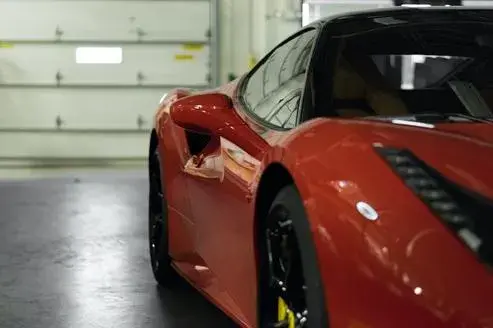
A hydraulic lift gate raises the vehicle to trailer height on a level platform rather than requiring it to be driven up a ramp. This is the decisive piece of equipment for any car with limited ground clearance.
If your vehicle has a front splitter, lowered suspension, coilovers, or factory clearance under roughly four inches, standard ramps risk contact with the underside or front bodywork. Measure the ride height of the vehicle and disclose it during the booking process so we can accommodate the vehicle properly.
Soft straps, air-ride and in-transit protection
Enclosed carriers secure vehicles using soft nylon wheel straps rather than chains. The straps attach to the wheels and tires, so nothing makes contact with the bodywork, suspension components or chassis.
Air-ride suspension is better for the load, and it allows the trailer to lower itself down to accommodate low ground clearance vehicles. Not all enclosed trailers come with an air-ride suspension.
In-transit protection like car covers is rarely used as they can chafe on the clear-coat of the car during transit. Carriers can supply specialized chafe-proof car covers if the customer requests it during booking.
Tracking
SGT Auto Transport gives you the ability to track your shipment at any time and get an update on the transit status. Go to Track My Shipment, input the Order ID and the email address you used to make the booking. You will receive an update on the status of your shipment and an approximate location. You can also contact us via phone, live chat, or email to get an update that way.
Broker vs Carrier - and How to Vet an Enclosed Transporter
Brokers arrange the shipment and carriers perform it. Both are licensed by the FMCSA, but brokers never handle the cars, while carriers own the trucks and drive them.
What each one actually does
A broker must file a $75,000 surety bond (BMC-84) or trust fund (BMC-85) with the FMCSA. A carrier must file liability insurance, and auto carriers also hold cargo insurance.
A carrier owns the truck and the trailer, and employs the driver. Most enclosed carriers are small operations running anywhere from one to a handful of trucks on fairly fixed routes. Some carriers book customers directly, but few can fill a trailer that way, so most rely on brokers for much of their work.
A broker, like SGT Auto Transport, is licensed by the Federal Motor Carrier Safety Administration to arrange transport. We quote you, post your vehicle to the national load board, match it with a carrier already heading your way with space, check that carrier's operating authority and insurance before anything is agreed, and manage the shipment from pickup through to delivery. This is why a customer in Ohio can get a car to Nevada next week without needing to know which trucking company happens to be running that route.
Carriers are limited to the routes their trucks cover, whereas brokers can reach thousands of carriers nationwide and can arrange for your shipment, regardless of the schedule, the type of car, or the delivery method.
The load board, and why enclosed capacity is scarce
When you book, your shipment gets posted to a load board with the route, the dates, the vehicle details, and the rate being offered to the carrier. Drivers check these boards constantly and accept the loads that fit their route at a rate that works for them.
Open trailers far outnumber enclosed ones and handle more than 90% of shipments. Enclosed trailers are scarce for four reasons:
- Enclosed trailers are more expensive to buy and maintain;
- Carriers opt for open trailers because they carry more cars and earn more per load;
- Enclosed trailers require more expensive insurance;
- Operating an enclosed trailer requires additional training, which adds to the labor cost;
These costs are why enclosed trailers are scarce and more expensive to book. That is also why we recommend booking an enclosed shipment ahead of time so we can find you one in time for your shipment schedule.
Car Shipping Quote
- Get your quote fast and simple
- Instant car shipping cost calculator
- High accuracy in price estimation
- Ship a Car to Another State Easy
How to check any company before you book
This takes about five minutes, and it works on any auto transport company, including SGT Auto Transport.
Find their MC and USDOT numbers. Federal rules require the USDOT number on the trucks, and any legitimate broker publishes its MC and USDOT numbers on its website. If a company doesn't publish them, or gets evasive when you ask, you have your answer.
Look them up in FMCSA SAFER and search either number. It's free, it's public, and it takes under a minute. You'll see the legal and trading name, the address, how long they've been operating, their authority status (if they are a broker, a carrier, or both), and their insurance filings.
Check that the operating authority says ACTIVE. Not pending, not revoked, not inactive. A revoked authority means that company isn't legally permitted to arrange or carry out interstate transport at all. This is the single most important line on the page.
Check the insurance filings are current, and ask what the cargo insurance limit is in dollars. This is the maximum payable for damage to a vehicle on the truck, and on an enclosed shipment carrying a high-value car it's the number that matters most. Ask about the deductible as well, and who pays it.
Confirm the broker's bond or trust fund. Brokers must hold a $75,000 surety bond (BMC-84) or trust fund (BMC-85), filed with the FMCSA, which exists to pay shippers or carriers if the broker fails to meet its obligations. It appears in the licensing record. No bond or trust fund means no legitimate brokerage.
Ask for the certificate of insurance before you book. Any legitimate company will send it without hesitation. Once a carrier has been assigned to your car, you should be able to get that carrier's certificate too.
Read the complaint patterns rather than the average score. A rating built on thousands of reviews tells you far more than a 5.0 across 40. Read the negative reviews specifically and look for a story that repeats itself, such as the price changing after booking, cars sitting unassigned, or nobody answering the phone after payment. One unhappy customer is normal. The same complaint fifty times is how the company operates.
Is enclosed transport door-to-door?
Yes. Enclosed transport is door-to-door as standard. When a truck cannot safely reach your address, we arrange a nearby meeting point instead.
Sometimes it's not possible to pick up or deliver a vehicle with an enclosed trailer directly to the specified address due to access constraints. 18-wheelers need sufficient space to maneuver safely, which can be difficult in urban and some rural areas. If your location is found to be insufficient, SGT Auto Transport will suggest a new, more suitable location close by.
How enclosed auto transport works
Three steps: you book, we assign a vetted enclosed carrier, the driver collects and delivers your car in a covered trailer. You pay nothing until that carrier is assigned, and you're told which company has your vehicle.
Get a quote and book
We assign a vetted enclosed carrier
Pickup, transit and delivery

Why choose SGT for enclosed transport
You pay nothing until a verified enclosed carrier is assigned to your vehicle - no booking fee, no holding deposit. Find a legitimate comparable quote lower, and we match it.
Licensed and verifiable. MC 873392 and USDOT 2521690. Both links go straight to our FMCSA SAFER record - check our operating authority and insurance filings before you book.
Every enclosed carrier is vetted before assignment. We confirm active operating authority, current cargo insurance, and a minimum of $250,000 in cargo coverage before your car is dispatched. We ensure they have a good insurance history, a good track record on the market, and check their proficiency in that particular service so we know that they are a good match for you.
We tell you which carrier has your car, with the company name, MC number, and driver contact at assignment.
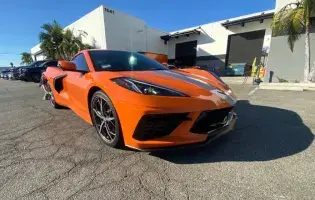
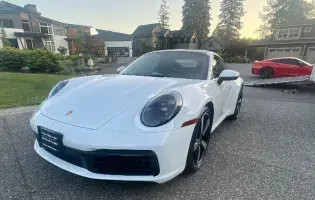
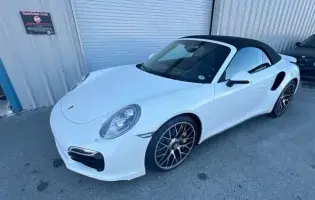
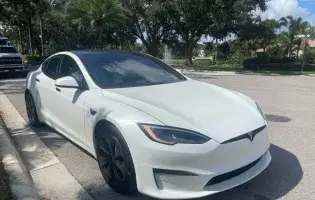
Cars we've shipped enclosed
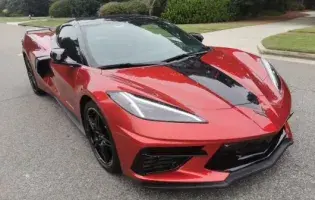
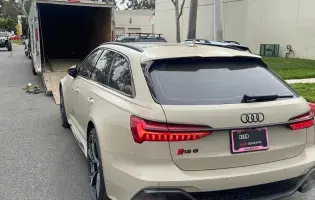
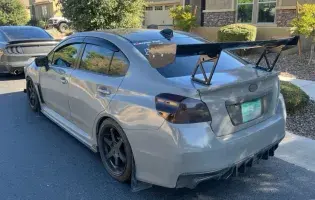
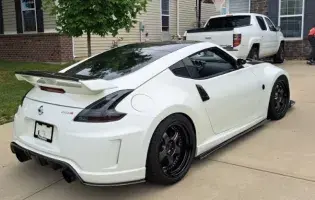
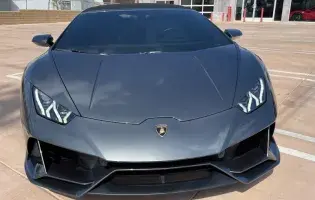
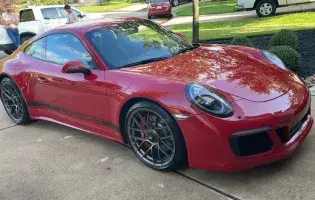
Every vehicle below is a real customer car, photographed and submitted to us by a satisfied customer - not stock photography. Thirteen of them, from an Audi RS Q8 to a Porsche 911, all moved door to door on enclosed trailers.
Car Shipping Quote
- Get your quote fast and simple
- Instant car shipping cost calculator
- High accuracy in price estimation
- Ship a Car to Another State Easy
Frequently Asked Questions
How much more does enclosed cost than open?
Enclosed costs 21.3% to 38.9% more than open, depending on distance. The premium is 21.3% on runs under 500 miles, peaks at 38.9% between 1,500 and 1,999 miles, and holds at 37.3% on every move over 2,000 miles.
Is enclosed car transport worth it?
It is if you are transporting a vintage, classic, or luxury vehicle that needs to be protected from hail and adverse weather. Cargo insurance on either trailer type may exclude Acts of God, so physical protection is the main safeguard, which is why many car owners prefer to ship with an enclosed trailer.
At what car value should I choose enclosed?
If your vehicle exceeds the $40,000 mark, SGT Auto Transport recommends choosing the enclosed option. However, enclosed shipping is available to anyone who wants the extra protection, and that means regular vehicles as well. As long as you are willing to pay the premium, you can book enclosed regardless of the car's value.
How much cargo insurance covers my car, and what's the deductible?
Enclosed carriers usually hold $250,000 to $3,000,000 in cargo coverage per load, a limit shared by all the cars on the trailer. As an SGT Auto Transport customer, you will not pay anything extra out of pocket for the insurance, as it is already included in the price. The deductible for the customer is $0, and for the carrier it is from $1,000 to $5,000 - it is covered by them and not you.
What happens if my car is damaged?
If your car gets damaged during the shipping process and the cause of the damage is covered by the insurance, you will be eligible for reimbursement. Once you’ve noted the damage on the Bill of Lading before signing it, contact the carrier for instructions on how to process the damage and how to file a claim with their insurance provider. If the carrier's limit is shared across the load and the cars on board are worth more than that limit, the shortfall falls to each owner's own insurance, which is why we confirm the limit against your declared value before assignment.
Hard-side or soft-side trailer - which do I get?
Hard-side trailers prevent damage from hard objects, but have limited access, which means cars cannot be loaded from the side with a lift. Soft-side trailers do offer protection from the elements, rain, and some road debris, but that protection is weaker against heavier debris than a hard-side trailer's. Soft-side trailers can be fully opened to give access for side-loading, making it easier to unload select vehicles without having to unload the others.
Can I get a single-car trailer, and what does dedicated cost mean?
Yes, you can, but not through SGT Auto Transport, as the carriers we work with primarily focus on large carriers, which are more economical. Single-car trailers, or hot-shot car shipping, are a specialized subset of car transportation that is single-use only and is more akin to personal towing rather than organized services that we provide. There are great companies out there that can accommodate you; just make sure they are licensed before booking.
Will my car be tied down with soft straps or chains?
Enclosed carriers use soft straps that attach to the wheels and tires, so nothing touches the bodywork, suspension or chassis. Many open carriers still use chains attached to the frame or axle, which is one reason enclosed transport is gentler on high-value cars. of tie-down method for both open and enclosed trailer transportation. While not as strong, soft ties are much safer for the vehicle and are sufficiently sturdy for the shipping of stationary vehicles over a long distance. Chains are rarely used in car shipping and are more suitable for heavy loads and heavy equipment transportation.
My car is lowered - do you have a lift gate?
Yes, many of the enclosed trailers our carriers use come with a lowering lift gate and hydraulic lowering suspension to accommodate lowered vehicles like sports cars. There are also specialized low-clearance trailers that use a lift gate to pick up the vehicle and align it with the trailer so it can be driven on without the use of a ramp, which can damage the spoilers or side skirts.
Are enclosed trailers climate-controlled?
Some trailers are climate-controlled. Those are hard-shell trailers that are specifically designed to provide a climate-controlled environment to vehicles that require such accommodations. The most frequent use case for these types of trailers is carbon-fiber vehicles or vehicles with rare materials. Climate-controlled hard-shell trailers are relatively rare; that's why we suggest booking one 2-3 weeks in advance to give us the best chance of securing one.
Can I track my car in transit?
Yes, you can track your car’s shipping progress via the SGT Track My Shipment page. Input your email and shipment order ID into the tracker, and you will get an update on the location and status of your order. You can also give us a call or contact us via email or live chat to get detailed information about the status of your order, the current distance of your car from the delivery location, and an ETA on the exact delivery window.
How far in advance should I book enclosed?
Two or three weeks for enclosed car transportation, as opposed to 1 or 2 weeks for open trailer transportation. Enclosed trailers amount to only 10% of the total fleet volume in the U.S., meaning that availability for these types is reduced during times of high demand. To help us help you, book in advance and give us plenty of time to find you a reputable enclosed carrier that can both fit your budget and safety requirements.
Is guaranteed pickup available, and what does it cost?
Yes, guaranteed pickup is available for both enclosed and open car shipping. Usually, the price of adding guaranteed pickup is an extra $150 - $400, but this entirely depends on the carrier, the demand, and the local availability of service providers. To add guaranteed pickup to your SGT Auto Transport order, select it from the optional menu. It will automatically display the surcharge amount to your total order cost, and you can either decide to opt in or out before finalizing the booking.
Is enclosed transport door-to-door?
Door-to-door transportation is automatically included in your enclosed shipping at no extra cost. All you have to do is give the exact address for pickup and delivery, and we will verify whether it's accessible by the carrier. If not, we will suggest the closest available location for both pickup and delivery.
Can I ship personal items in an enclosed transport?
Yes, you can ship personal items in an enclosed transport trailer if they are placed inside your car, in the trunk, or on the back seat below the window line. You are allowed up to 100lbs for free. Keep in mind that carrier insurance is freight-specific and does not cover damage to personal belongings, so do not ship valuable items with the car.
Can you ship an EV, and at what charge level?
Yes, you can ship an electric vehicle the same way you can with a traditional vehicle; it simply costs more to do. Battery packs add 800 to 1,000 lbs, which takes more of the trailer's weight allowance and can raise the price. We ask for a 30% to 50% state of charge, which leaves enough to drive the car on and off the trailer at both ends.
Do you ship motorcycles enclosed?
Yes, the majority of motorcycles shipped through SGT Auto Transport are shipped in an enclosed trailer because it is more secure. Due to the low weight and small dimensions, motorcycles are shipped at a lower rate per mile than 4-wheel vehicles. To learn more, you can visit the motorcycle shipping page.
Are you a broker or a carrier?
SGT Auto Transport is a broker with a license number MC: 873392 / USDOT: 2521690, and an active BMC-84 surety bond. You can check our license by using the official FMCSA SAFER platform here.
External Sources
- FMCSA. “SAFER Company Snapshot, SGT Auto Transport (USDOT 2521690)”. https://safer.fmcsa.dot.gov/query.asp?searchtype=ANY&query_type=queryCarrierSnapshot&query_param=USDOT&query_string=2521690. Retrieved November 5, 2026.
- Electronic Code of Federal Regulations. “49 CFR 387.307, Property Broker Surety Bond or Trust Fund”. https://www.ecfr.gov/current/title-49/subtitle-B/chapter-III/subchapter-B/part-387/subpart-C/section-387.307. Retrieved November 5, 2026.
- Electronic Code of Federal Regulations. “49 CFR Part 371, Brokers of Property”. https://www.ecfr.gov/current/title-49/subtitle-B/chapter-III/subchapter-B/part-371. Retrieved November 5, 2026.
- FMCSA. “Small Entity Compliance Guide for Broker Operations”. https://www.fmcsa.dot.gov/sites/fmcsa.dot.gov/files/docs/small-entity-comp-guide-broker-operations-508.pdf. Retrieved November 5, 2026.
- Electronic Code of Federal Regulations. “49 CFR 387.303, Security for the Protection of the Public: Minimum Limits”. https://www.ecfr.gov/current/title-49/subtitle-B/chapter-III/subchapter-B/part-387/subpart-C/section-387.303. Retrieved November 5, 2026.
- Electronic Code of Federal Regulations. “49 CFR 390.21, Marking of Self-Propelled CMVs and Intermodal Equipment”. https://www.ecfr.gov/current/title-49/subtitle-B/chapter-III/subchapter-B/part-390/subpart-B/section-390.21. Retrieved November 5, 2026.
- Trustpilot. “SGT Auto Transport Reviews”. https://www.trustpilot.com/review/sgtautotransport.com. Retrieved November 5, 2026.