

Used Cars Buyer's Handbook for Copart
What Is Copart and How Does It Work?
Copart is one of the most popular online car buying and selling services in the U.S., with a current market cap of $27 billion and headquarters in Dallas, Texas. For 2025 alone, it has facilitated more than 4 million transactions globally. It connects sellers and buyers from all over the U.S. through a very robust and reliable system that promotes the sale of damaged, used, salvaged, clear-title cars to sellers like insurance companies and private buyers who are looking for a great deal. It has roughly 275 locations across 11 counties, with nearly 200 physical auction houses in the U.S. alone. It has a huge inventory of 500,000 vehicles on a daily basis, including cars, trucks, SUVs, and heavy equipment. It has 3 sign-up tiers with different perks - the free Guest tier, the Basic or the Premium tier.
Salvage, Clean-Title, and Insurance Auctions Explained
When using a service such as a Copart auction, you will notice that vehicles are sorted based on title and condition. The most desirable and highly priced vehicles are with a clean title, which means that they have not had major accidents. Salvage titles are a specific kind of title categorization which basically means a vehicle has been in a major accident and it has been written off by the insurance provider, but has then subsequently been fished and is now safe to drive. Copart is very popular with insurance providers who want to offload total-loss vehicles and minor damage vehicles simply because it makes far more financial sense for them to do so rather than spend the money fixing them. This can be quite beneficial to buyers who are willing to risk it, because the damage can be minor and easy to fix, but it can also be a total loss for them as well. Salvage titles are cars that have damage that has not yet been repaired; rebuild titles are cars that have been damaged and were previously a salvage title, and clean titles are cars with no notable or disclosed damage.
Who Can Buy From Copart? Public vs Licensed/Broker Access
If you are wondering “How does Copart work?”, then chances are you are also wondering who can actually buy from the auction house. The answer is - everyone can buy from Copart, as long as they are an active user on the website and either have a basic or a premium account. The guest account only allows viewing and does not require identification proof, whereas the Basic and Premium accounts may require proof of identity or a driver’s license if you are buying a salvage title from certain states. Copart public or dealer offers give visitors access to a diverse and wide inventory of choices that come from dealers, private sellers and insurance companies, which means an abundance of choice and an abundance of quality in cars.
Is Copart Legit and Safe to Buy From?
Copart Reviews and Reputation
Copart is a globally established and recognized online auction house, but it has suffered from a bad reputation, with online trust scores as low as 1.7 and generally low Trustpilot scores stemming from high risk, hidden vehicle damage, and slow customer support. One of the issues with Copart is inaccurate listings, which is substantiated by multiple user reports of vehicles being listed as “runs and drives” but upon arrival and inspection show major engine and gearbox damage. Members of other online opinion platforms like Quora warn that photos on listings can be taken in a way to hide major structural issues and damage, missing parts, and catalytic converters. There is an additional issue that users cite with Copart, being that the platform has extensive auction fees, storage fees, and transport fees which can often account for double the price of the vehicle. While the majority of deals on Copart run smoothly, there is an issue with the aforementioned public opinions, which is why SGT Auto Transport suggests that readers be cautious when using Copart. We suggest using 3-rd party history check services like CarFax to confirm vehicle information.
The Risks of Salvage and Rebuilt Titles
Salvage and rebuilt titles come with some inherent risk to them primarily because the damage to the car is known and disclosed, but it may be possible for a vehicle to hide undisclosed damage. Salvage vehicles receive the title of “Salvage” once an owner or an insurance company deems the repairs to a vehicle over the maximum threshold as set by the state the vehicle is in. It basically means that the repairs outweigh the useful cost of the vehicle, and it's better to get rid of it. Damage can be minor, and insurance companies might be wrong, but at the same time, it is possible to get a vehicle that is beyond reasonable repair expenses.
Rebuilt titles are vehicles that have received some damage which has been repaired. The extent and the quality of the repairs should be documented by the local DMV for the vehicle to be retitled as a “Rebuilt” category; however, it is possible for the quality of the repairs to be lacking or to have been done with lesser quality parts, which exposes buyers to high risk. This is a risk not so much with Copart, but rather an inherent risk with the titling and quality assurance that some states provide.
How to Buy a Car From Copart Step-by-Step
Registering, Deposits, and Placing Bids
In order to be eligible for bidding and participating in auctions, a free visitor should create an account and either get a premium or basic account. To verify the account, it is required to submit a valid photo ID and a minimum 10% refundable security deposit of at least $400 to unlock the bidding power of the account. The $400 minimum deposit into an account unlocks the power to bid on a vehicle with a new value of $4,000. The platform supports multiple payment processes like a debit card, a credit card, or a wire transfer.
Some states require that you have a dealer license to buy a salvage or clean title car, so check with your state to see if rules apply. If you do not have the right licensing, you can buy a car through a Copart Broker. When searching for a car, be sure to check the availability of online inventories and sort by make, model, year, and location. Carefully read the vehicle lot details and check if there is any damage disclosed in the description. Look closely at the listing photos, or you can opt for an independent physical inspection agent to see the car before you bid.
You can place a bid on a vehicle before the bidding starts; you can set your maximum bid line, and the system will bid for you up to that amount. You can also participate in the live bidding by joining the virtual bidding room and compete against other buyers. If you’ve placed the winning bid, you need to wait for the seller to approve it.
Winning, Paying, and Picking Up Your Car
You can win a vehicle bid through either the automated bidding system by placing a max bid threshold or by participating in the live bid portion. Once you’ve won the auction, you have to wait for the seller to accept your bid. You can also opt for the Buy Now option, which skips the bidding process and directly pays for the vehicle at the asking price the seller has set. Once your bid is confirmed to be accepted by the seller, you have 3 business days to make a transaction through the Copart Payments system, which supports wire transfers, credit or debit card payments, Google Pay, Apple Pay, or PayPal. You should include any applicable sales tax, service fees, or membership costs in your transaction as well. You can decide to have the car delivered to you, or you can go and pick it yourself. Copart does offer delivery services; however, they can be quite expensive at times, so you might want to opt for a self-pickup or SGT Auto Transport’s online car buyers service, which specifically handles online auction and dealership car shipping to your door.
Copart Fees Explained (and How to Estimate Them)
Estimating Copart fees can be done through the Copart fee calculator, which will give you a better number than a general estimation. Copart has buyer fees that scale with the winning bid amount, with a clear title average fee of 7.25%, while a salvage title can run as high as 12.5% of fees. The gate fee is a flat charge of $79 for a clean title or a $95 fee for a salvage non/clean title to cover vehicle loading. There are virtual bidding fees, which are added to the pricing bids online during the auction. Then there are environmental & title fees, which amount to a flat administrative fee around $10 to $15 for environmental compliance and a $20 fee for title processing. It's also possible to incur penalties for delayed payments once the 3-day payment period for a winning bid elapses, which typically amounts to the safe deposit in your account or 10% of the bid price. If you delay picking up the vehicle on time, you will be charged storage fees as well.
Copart vs IAAI: What's the Difference?
When comparing Copart vs IAAI its important to note that both platforms specialize in salvage title auctions. While Copart has a larger inventory and a global presence, IAAI has a more transparent seller program, and it generally provides a better customer experience for people who want a bit more clarity on the condition of a car. Copart has a listing flow of 116,000 cars weekly, while IAAI publishes roughly 50,000. IAAI supports inspection videos and detailed engine videos as well as independent inspections, like Copart, which allows access to the vehicle through a 3rd party inspection service of your choice. Both companies have heavy fees, which can range from $500 to $1,200 above the car sticker price for winning bids, with Copart shipping rates being noted as running higher. A Copart membership will give you access to more tools and information and will increase the visibility of your listing. In general, there is a slightly higher risk of buying salvage cars from Copart than from IAAI, though there is an inherent risk in buying a salvage car altogether.
Pros and Cons of Buying From Copart
Buying a salvage car from Copart can be very easy, and it can be done within 3 days; however, Copart is known for delaying deliveries for vehicles, which is the reason why so many people ship the car themselves either on a trailer they own, or with a 3-rd party service like SGT Auto Transport. Copart has an extensive inventory, but the same inventory can be found lacking in quality and quality assurance. The company does not provide any sort of return policies since it's an intermediary and is not responsible for the vehicle - it is sold as is, and it's up to the buyer to see the quality of the vehicle and determine whether it's a suitable match. Buying a salvage or rebuilt title car from Copart can be a mixed bag, as some users have gotten very lucky in acquiring otherwise expensive and rare vehicles and rebuilding them for cheap, while others have had issues with both sellers and delivery options.
How to Get Your Copart Car Home: Shipping a Non-Running Vehicle
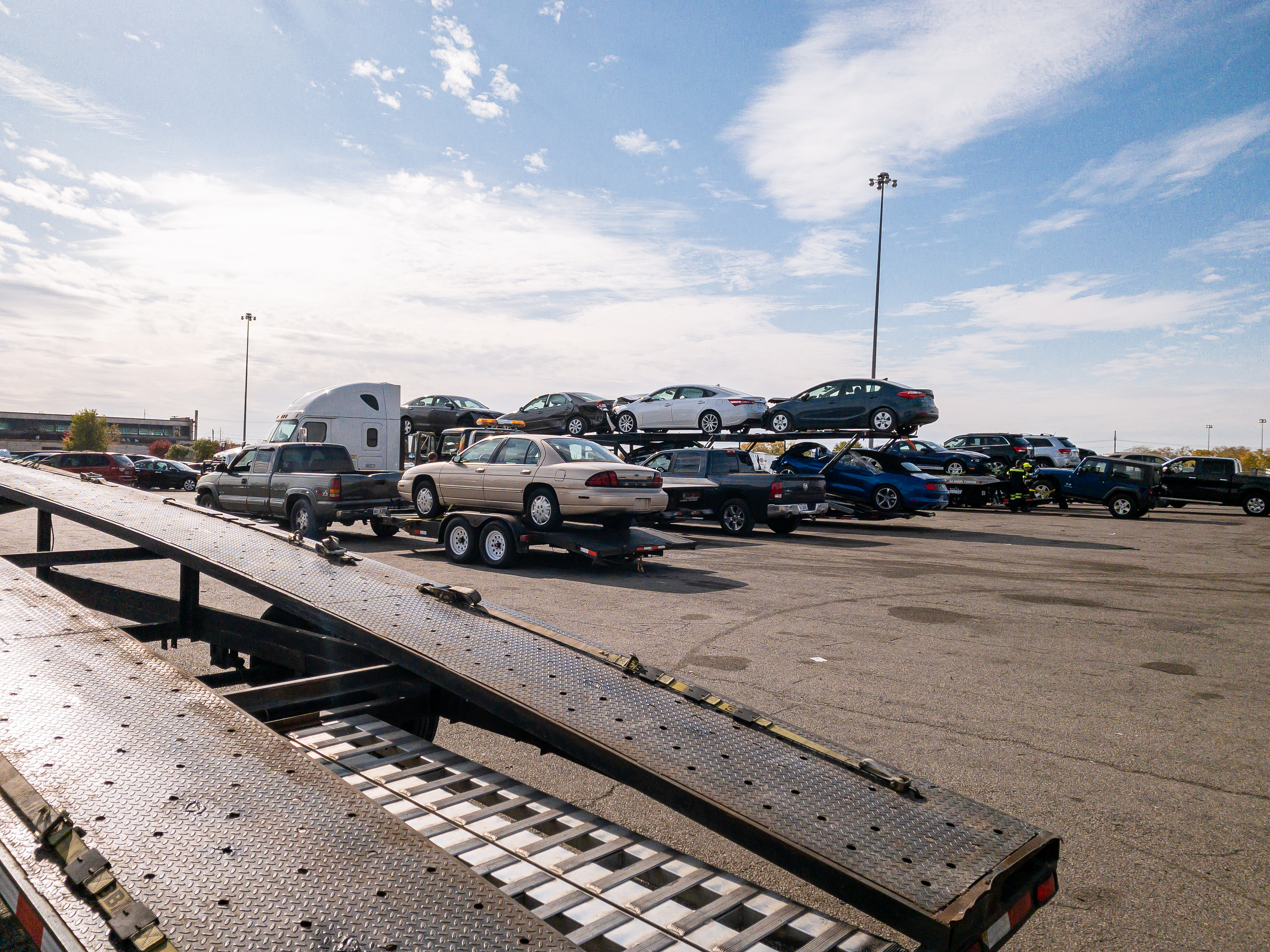
Copart is known for its extensive network of auction locations; however, they are also known for charging extensive fees for car delivery services. That is why many opt for an independent car shipping company like SGT Auto Transport, because we can offer a wide range of services and specialized options which are individually matched to every customer and vehicle. If you are shipping an inoperable vehicle or a vehicle that does not roll, you will need assurance that it can be shipped affordably and without any extra damage to the car. Luckily, we have a specialized inoperable vehicle service and an enclosed trailer shipping service designed to keep your car safe and have it delivered to your door at the best prices on the market.
Final Verdict: Is Copart Worth It for Buyers in 2026?
Finding the right car through Copart can be very exciting, but you need to do your research before going for that final bid. Inspect the car, see the photos, and send a 3rd party service to check the car out before bidding. Set your max bid or be a part of the live event and get the best price; set your limit and get the value you are looking for. Use the Copart Safe Payment system and settle all of the fees and bills securely from the comfort of your home. Get the car delivered to you with a specialized service that does not charge you an arm and a leg, and that can ensure your vehicle is delivered within a reasonable time frame and at a reasonable rate.