
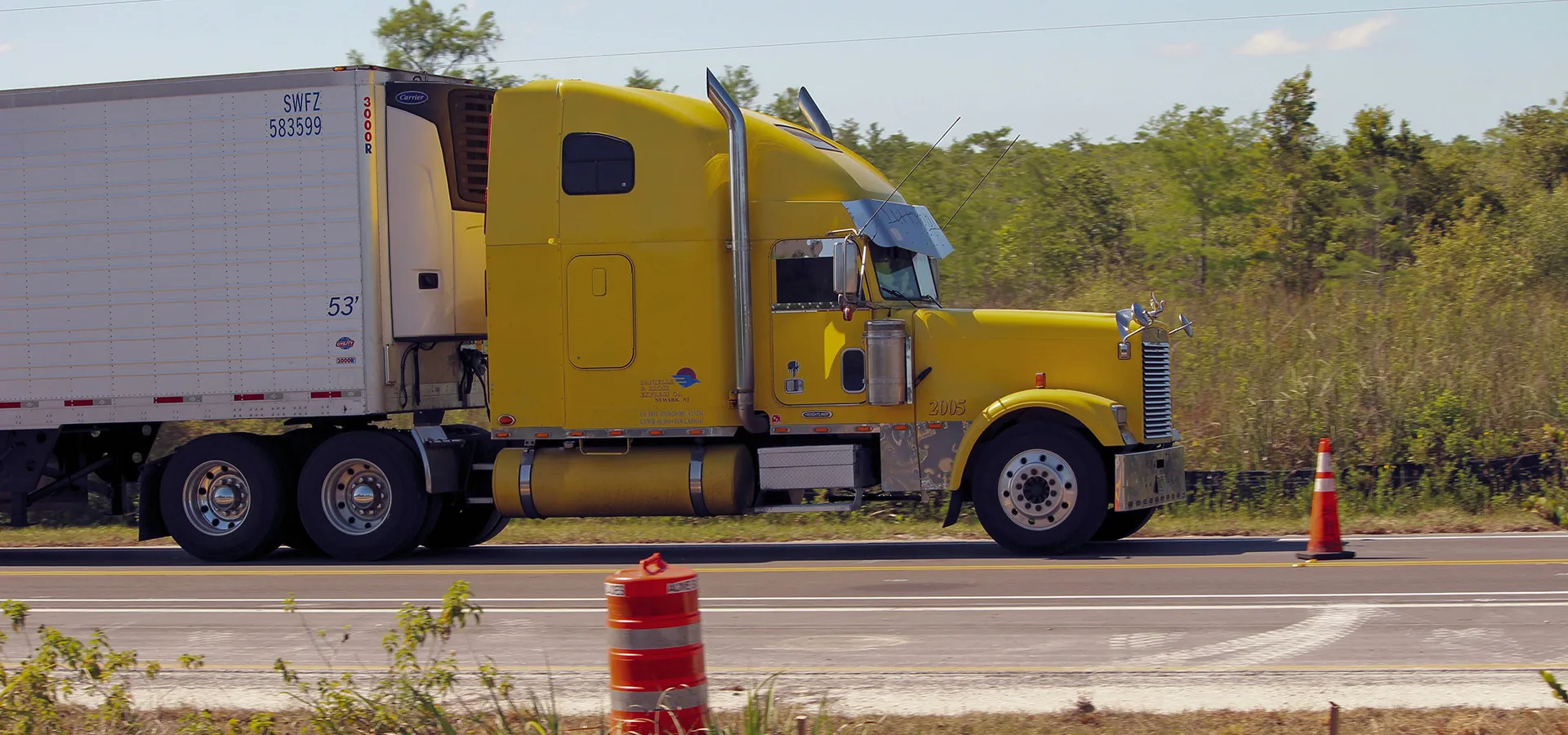
Ship a car to or from Florida with no deposit, a 7-day price hold, and a driver who knows which gated communities, condo towers, and Keys bridges a car carrier can actually reach.
Below are 2026 rates, seasonal timing, where the truck meets you if it can’t reach your address, and how to register your out-of-state car in Florida once the car arrives.
Key takeaways
Florida lanes run $300 to $2,500 on an open carrier, from short in-state moves to coast-to-coast trips.
Transit runs 1 to 10 days depending on distance, on top of a 1 to 3-day dispatch window.
In gated communities, condo towers, and the Keys, the truck often meets you nearby rather than at your door.
Book 1 to 2 weeks ahead, and 2 to 4 weeks ahead during the fall and spring snowbird waves.
New residents must title and register within 10 days, with at least $10,000 PIP and $10,000 PDL insurance in place.
How much does it cost to ship a car to or from Florida?
Florida lanes run $300 to $2,500 on an open carrier in 2026. Distance sets most of the price, followed by season, direction, vehicle size, and trailer type. The range is wide because Florida runs both short in-state trips and coast-to-coast moves.
The rate per mile falls sharply as the distance grows. Trips under 500 miles, such as a run from Miami to Orlando, average about $1.63 a mile, because loading, inspection, and local driving cost the same on any trip. Florida to New York falls in the 1,000 to 1,499-mile band at about $0.87 a mile, and Florida to California in the 2,500 to 2,999-mile band at about $0.55. Past 3,000 miles, the rate drops to about $0.52. Check your own route with the SGT Auto Transport price calculator.
Price by vehicle
Vehicle class affects the price of the shipment, but not as much as distance does. A carrier sells deck space and weight on an eight- to ten-car trailer, so a lifted pickup can take two sedan slots.
| Vehicle type | Price range |
|---|---|
| SUV Midsize | $800 - $1,600 |
| Sedan Compact | $750 - $1,525 |
| SUV Compact | $800 - $1,600 |
| Sedan Midsize | $750 - $1,475 |
| SUV Full-size | $800 - $1,700 |
| Coupé | $725 - $1,500 |
| Pickup Crew Cab | $950 - $2,200 |
| Hatchback | $725 - $1,575 |
| Sedan Full-size | $750 - $1,525 |
| Convertible | $750 - $1,450 |
| Pickup Small | $825 - $2,025 |
| Minivan | $825 - $1,825 |
| Station Wagon | $800 - $1,600 |
| Pickup Extended Cab | $925 - $1,950 |
| Passenger Van (8-12 People) | $725 - $2,075 |
| Cargo Van Large | $875 - $2,150 |
| Supercar | $575 - $1,550 |
| Micro-Car | $725 - $1,550 |
Open carrier bookings to and from Florida in the past 6 months.
These ranges come from SGT's Florida bookings across all vehicle classes. A midsize SUV typically quotes $50 to $125 above a midsize sedan, and a crew cab pickup $200 to $725 above it. Declare any lift kit or roof box at booking, or the driver may not be able to load the car.
What moves your price
- Distance, with the rate per mile falling as the trip lengthens
- Season and direction, with southbound lanes tight in late fall and northbound lanes tight in spring
- Vehicle size and height, including lift kits and roof boxes
- Pickup access, which in gated communities and condo districts means a meeting point rather than a surcharge
- Trailer type, with enclosed adding 21.3% to 38.9% over open depending on distance
Florida route prices
Florida's busiest lanes run up the East Coast and west to Texas and California. Transit takes 1 to 2 days to Georgia, North Carolina and Virginia, 2 to 3 days to the Northeast, and 5 to 7 days to California.
Car shipping prices from Florida
| Origin | Destination | Price range | Distance (mi) | Transit time |
|---|---|---|---|---|
| Florida | Arizona | $975 - $1,675 | 2170 | 4-5 days |
| Florida | California | $1,100 - $1,850 | 2650 | 5-7 days |
| Florida | Colorado | $1,125 - $1,975 | 1920 | 3-4 days |
| Florida | Connecticut | $825 - $1,500 | 1290 | 2-3 days |
| Florida | Florida | $300 - $775 | 270 | Up to 1 day |
| Florida | Georgia | $475 - $925 | 540 | 1 day |
| Florida | Illinois | $800 - $1,475 | 1300 | 2-3 days |
| Florida | Indiana | $800 - $1,350 | 1140 | 2-3 days |
| Florida | Massachusetts | $825 - $1,575 | 1420 | 2-3 days |
| Florida | Michigan | $875 - $1,550 | 1300 | 2-3 days |
| Florida | Montana | $1,600 - $2,500 | 2630 | 5-7 days |
| Florida | New Jersey | $725 - $1,450 | 1190 | 2-3 days |
| Florida | New York | $825 - $1,675 | 1260 | 2-3 days |
| Florida | North Carolina | $625 - $1,175 | 710 | 1 day |
| Florida | Ohio | $800 - $1,425 | 1090 | 2-3 days |
| Florida | Pennsylvania | $775 - $1,450 | 1130 | 2-3 days |
| Florida | Texas | $750 - $1,375 | 1190 | 2-3 days |
| Florida | Virginia | $725 - $1,325 | 900 | 1-2 days |
| Florida | Washington | $1,275 - $2,050 | 3120 | 7-10 days |
Data sourced from SGT Auto Transport's last 6 months of shipping with Florida at one end. All prices are based on open carrier rates for a mid-sized sedan and may differ from the current market rates you may experience.

Car Shipping Quote
- Get your quote fast and simple
- Instant car shipping cost calculator
- High accuracy in price estimation
- Ship a Car to Another State Easy
Car shipping prices to Florida
| Origin | Destination | Price range | Distance (mi) | Transit time |
|---|---|---|---|---|
| Arizona | Florida | $1,050 - $1,600 | 2160 | 4-5 days |
| California | Florida | $1,200 - $1,825 | 2630 | 5-7 days |
| Colorado | Florida | $1,000 - $1,550 | 1890 | 3-4 days |
| Connecticut | Florida | $775 - $1,325 | 1270 | 2-3 days |
| Florida | Florida | $300 - $775 | 270 | Up to 1 day |
| Georgia | Florida | $475 - $775 | 500 | Up to 1 day |
| Illinois | Florida | $725 - $1,175 | 1270 | 2-3 days |
| Maryland | Florida | $650 - $1,075 | 970 | 1-2 days |
Data sourced from SGT Auto Transport's last 6 months of shipping with Florida at one end. All prices are based on open carrier rates for a midsize sedan and may differ from the current market rates you experience.
Direction changes the price. Leaving the state of Florida costs more at the ceiling on every route we price both ways.
Door-to-door in Florida: where the truck can and cannot go
SGT Auto Transport's door-to-door service reaches most Florida addresses. Gated communities, condo towers, low tree canopy, barrier islands, and the Keys often need a nearby meeting point, at no extra cost.
A full-size car carrier runs about 75 feet, so the street determines where it can stop to collect or drop off a vehicle:
| Area | What limits the truck | Usual meeting point |
|---|---|---|
| Gated and 55+ communities: The Villages, Southwest Florida | Gate rules, truck bans inside | Clubhouse or main entrance, with the gate code ready |
| Condo towers: Brickell, Miami Beach, Fort Lauderdale, West Palm Beach | No truck access to the building | Nearby lot or wide side street |
| Tree canopy: Coral Gables, Winter Park, St. Augustine | Low oaks block the upper deck | A main road nearby |
| Barrier islands: Sanibel, Key Biscayne | Narrow streets and causeways | Mainland lot |
| Florida Keys: US-1, Overseas Highway | Two-lane road, few places to stop | Agreed stop on US-1; will deliver later in the delivery estimate. |
Shopping center lots are the usual meeting point, and the driver confirms it by phone before arrival. Remove your SunPass or E-PASS before pickup, because Florida collects most tolls electronically and a transponder left in the car can be billed for the carrier's whole trip.
Best time to ship a car in Florida
Ship southbound before late October or northbound before April to avoid the snowbird peaks. Outside those waves, booking 1 to 2 weeks ahead is usually enough.
| Window | What happens | What it means for booking |
|---|---|---|
| Late October to January | Snowbirds heading south | Book southbound legs 2-4 weeks ahead |
| February to March | Florida's peak season; northbound trucks have space | Good window for northbound moves |
| April to May | Snowbirds returning north | Book northbound legs 2-4 weeks ahead |
| June to November | Hurricane season, busiest August to October | Allow a wider delivery window |
| August | College move-in at UF, FSU, UCF, USF and Miami | Book campus moves early |
| June to August | Summer relocation peak | Book 1-2 weeks ahead |
While carriers fill up heading south in fall, trucks returning north often have open spots, so shipping against the flow can mean a faster pickup at a lower rate.
Hurricane season runs from June 1 to November 30. A storm warning can pause pickups and deliveries in the affected area for several days. You will be notified if adverse weather warnings are in effect. You can track your shipment using SGT Auto Transport’s Shipping Tracker.
Open or enclosed car shipping for Florida
Open transport is the standard and suits any daily driver, SUV or work truck. Enclosed is worth it for classic, exotic, low-clearance or new cars, which it shields from salt air, storms and road debris.
Open transport carries about 9 in 10 of our Florida bookings. Enclosed typically adds +21.3% on in-state trips, +34.1% on 1,000 to 1,500-mile trips such as Florida to the Northeast, and +37.3% for coast-to-coast shipments. Enclosed carriers also use hydraulic liftgates, which load lowered sports cars level rather than up a steep ramp.
Enclosed trailers are scarcer, so allow 2 to 4 weeks of lead time rather than 1 to 2 when booking. Top-load placement on an open trailer is the middle option: your car rides on the upper deck where nothing above it can drip, for well under the enclosed price.
Who ships cars to and from Florida
A lot of Florida shipments come from snowbirds, military families, students, relocating workers, and online buyers, and each group runs on its own calendar.

Florida's biggest seasonal movement runs south in fall and north in spring, and the same households usually book both legs. Quote them together if you know both dates, and name a neighbor or property manager as your agent if you fly ahead.
SGT ships to and from NAS Jacksonville, NAS Pensacola, MacDill AFB, Eglin AFB, Patrick Space Force Base and NAS Key West. Send your orders early, because we plan backward from your report date and arrange gate access in advance.
The University of Florida, Florida State, UCF, USF and the University of Miami fill in August and empty in May. Campus delivery is rarely at the door, so plan on a nearby lot, and name an agent over 18 if you fly in separately.
Tampa, Orlando, Miami and Jacksonville draw steady inbound moves year-round, spread evenly rather than in peak weeks.
We collect from auction yards and dealers across Florida. Send the lot number, gate pass and buyer details before the driver arrives, and confirm the car runs, because a non-runner needs a winch-equipped carrier.

How to prepare your car for Florida car shipping
Wash and photograph the car, remove loose items and your toll transponder, and leave about a quarter tank of fuel. Twenty minutes of preparation protects you if anything goes wrong.
Wash the car and photograph every side in daylight, including existing marks
Leave the fuel at a quarter tank or less
Keep any personal items under the 100 lb allowance in the trunk
Remove your SunPass or E-PASS
Charge an EV to 30% to 50%
Tell dispatch at booking if the car does not run, or has a lift kit, oversized tires or a fixed roof rack
Disable the alarm, take off any removable roof or bike racks and hand over one key
How car shipping and receiving your car works
Shipping takes three steps: you get a quote, the driver inspects and loads the car at pickup, and you inspect it again at delivery. There is no deposit, and the price holds for 7 business days.
If you cannot be present, name an authorized agent aged 18 or over when you book, because the driver releases the car only to the person on the paperwork. The Bill of Lading is the contract, receipt and condition report in one, and any damage claim rests on what it records.
Get a quote.
Carrier assignment and pickup.
Delivery.
Insurance and how to verify a car shipper
Every carrier SGT assigns has the mandatory cargo insurance: $100,000 to $150,000 on open carriers and $250,000 to $3,000,000 on enclosed carriers. The carrier pays its $1,000 to $5,000 deductible, so your share of a covered claim is $0.
Each limit covers the whole load and is shared by all the cars on the truck, not applied to each car. Cargo insurance covers the vehicle, not personal items inside. You can request the carrier's Certificate of Insurance once we assign one to you.
Check any company's MC and USDOT numbers at FMCSA SAFER and confirm the authority reads active rather than pending or revoked. Our details are: MC 873392 and USDOT 2521690. As an active, licensed broker, SGT Auto Transport holds a $75,000 BMC-84 surety bond.
Shipping a car from a Florida port
Florida car shipping FAQs
How much does it cost to ship a car to or from Florida?
Most Florida shipments cost $300 to $2,500 on an open carrier in 2026. In-state moves sit at the bottom; Florida to New York runs $825 to $1,675, and California lanes run $1,100 to $1,850.
How long does Florida car shipping take?
Pickup takes 1 to 3 days, then transit takes up to 1 day for most in-state moves, 2 to 3 days to the Northeast, and 5 to 7 days to California.
What is the cheapest month to ship a car to or from Florida?
It depends on direction. Southbound is usually cheapest from February to September, and northbound from late October to March, when trucks heading back north have open space.
Is a deposit required, and when is the balance due?
No deposit is required, and nothing is collected until a carrier is assigned to your shipment. With the discounted payment option, you pay half once a carrier is assigned and the other half at delivery.
Is my car insured during transport?
Yes. Every carrier we assign carries $100,000 to $150,000 in cargo insurance per load on open trailers and $250,000 to $3,000,000 per load on enclosed ones, a limit shared by all the cars on the truck. You pay no deductible. Personal items are not covered.
Do I need to be present at pickup and delivery?
You or an authorized agent aged 18 or over must be there to inspect the car and sign the Bill of Lading. The driver releases the car only to the person named on the paperwork.
Can you deliver to a gated community or condo?
Yes. Share the gate code or register the driver with security in advance. Where the truck cannot enter, the driver meets you at the main entrance or a nearby lot at no extra cost.
Can I ship a car that does not run, or an electric vehicle?
Yes. Tell us at booking if the car does not run, because it needs a winch-equipped carrier. Charge an EV to 30% to 50%, since there is no charging in transit.
Can I leave personal items in the car?
Yes, up to 100 lbs, kept in the trunk or cargo area. They are not covered by cargo insurance, so remove anything valuable.
Do I need to remove my SunPass or E-PASS?
Yes. Florida collects most tolls electronically, so a transponder left in the car can be billed for tolls on the carrier's route. If yours is a windshield sticker that cannot be removed, tell dispatch at booking.
How far ahead should I book?
Book 1 to 2 weeks ahead in most months, and 2 to 4 weeks ahead for southbound moves from late October to January or northbound moves in April and May.
Does hurricane season affect car shipping?
Hurricane season runs from June 1 to November 30. A storm warning can pause pickups and deliveries in the affected area for several days, so keep your dates flexible.
Car Shipping Quote
- Get your quote fast and simple
- Instant car shipping cost calculator
- High accuracy in price estimation
- Ship a Car to Another State Easy
Nearby cities and routes
Popular Florida routes
External sources
- Florida Department of Highway Safety and Motor Vehicles. New Resident. https://www.flhsmv.gov/new-resident/
- FLHSMV. Form HSMV 82042, Vehicle Identification Number and Odometer Verification. https://www.flhsmv.gov/pdf/forms/82042.pdf
- FLHSMV. Procedure RS-30, Initial Registration Fee. https://www.flhsmv.gov/pdf/proc/rs/rs-30.pdf
- FLHSMV. Florida Insurance Requirements. https://www.flhsmv.gov/insurance/
- Florida Department of Revenue. TIP 26A01-01, Motor Vehicle Sales Tax Rates by State. https://floridarevenue.com/taxes/tips/Documents/TIP_26A01-01.pdf
- Florida Administrative Code Rule 12A-1.007. https://www.law.cornell.edu/regulations/florida/Fla-Admin-Code-Ann-R-12A-1-007
- Florida Senate. SB 1092 (2000) Staff Analysis, Motor Vehicle Emissions. https://www.flsenate.gov/Session/Bill/2000/1092/Analyses/20001092STR_SB1092.tr.pdf
- National Hurricane Center. https://www.nhc.noaa.gov/
- Federal Motor Carrier Safety Administration. Hours of Service Regulations. https://www.fmcsa.dot.gov/regulations/hours-of-service
- Federal Motor Carrier Safety Administration. SAFER Company Snapshot. https://safer.fmcsa.dot.gov/