
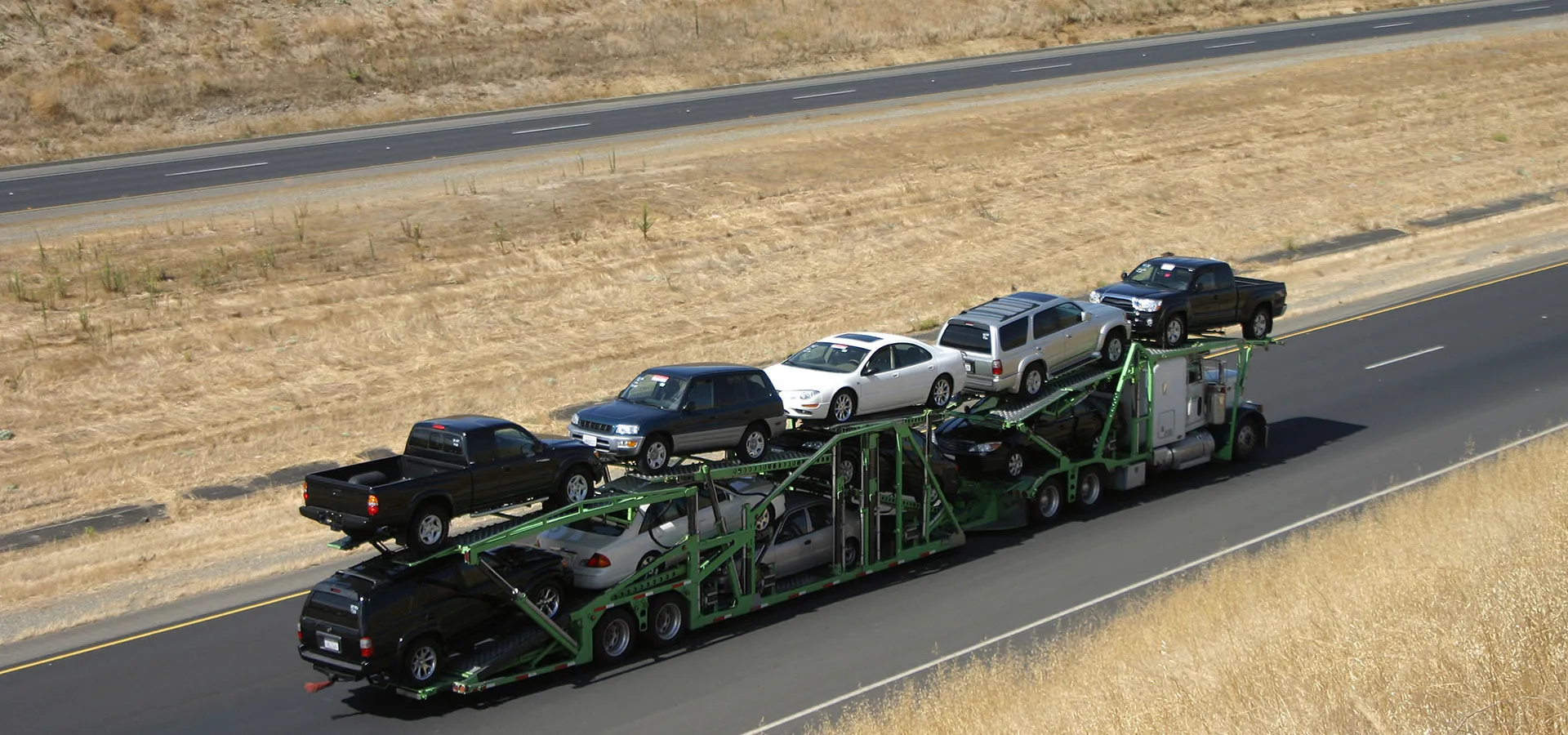
How much does it cost to ship a car to or from California?
The price range for shipping a car to or from California can be from $399 up to $2,299 per vehicle, depending on distance, time of year, fuel prices, the type of car, and more.
Cost by distance
| Distance | Open Transport | Enclosed Transport | Example Route |
|---|---|---|---|
| Under 500 miles | $399 - $599 | $799 - $999 | Arizona to California (387 mi) |
| 500 - 1,000 miles | $699 - $899 | $1099 - $1299 | Utah to California (730 mi) |
| 1,000 - 1,500 miles | $999 - $1299 | $1399 - $1599 | California to Washington (1,141 mi) |
| 1,500 - 2,000 miles | $1299 - $1499 | $1899- $2099 | California to Texas (1,570 mi) |
| 2,000 - 2,500 miles | $1399- $1599 | $1999 - $2199 | California to Illinois (2,030 mi) |
| 2,500 - 3,000 miles | $1699 - $1899 | $2299 - $2499 | California to New York (2,800 mi) |
| 3,000+ miles | $1699 - $1899 | $2399 - $2599 | California to Massachusetts (3,000 mi) |
* The Prices shown up above are reflective of current market conditions as of 2026. The prices are subject to change due to seasonal fluctuations, price of gas, pick-up/delivery locations, etc.
Open Car Transport Vs Enclosed Car Transport
| OPEN TRANSPORT | ENCLOSED TRANSPORT | |
|---|---|---|
| Average price difference | Baseline | 40% - 55% higher |
| Share of California shipments | Around 95% | Around 5% |
| Protection from weather & road debris | Standard tie-down, open deck | Fully covered, hard-sided trailer |
| Carrier availability in California | Highest - shortest wait for pickup | Lower - book 1 - 2 weeks ahead |
| Vehicles per trailer | 7 - 10 | 2 - 6 |
| Low-clearance lift-gate loading | Limited | Available, hydraulic lift gate |
| Typical standard cargo coverage | Up to $100,000 - $250,000 | Up to $500,000 and above on request |
| Best for | Daily drivers, SUVs, trucks, EVs, dealer stock | Classic, luxury, exotic, show cars, carbon-fiber bodywork |
What changes your price?
The demand. The demand for the service affects the overall price range customers can expect.
The distance. The distance dictates the cost to the carrier and is directly linked to the price of fuel.
The type of car. The type of car will determine the space it takes and the curbside weight of the trailer. Heavier vehicles cost more to ship than lighter ones.
The car’s condition. Inoperable vehicles cost more to transport because they require more equipment and time to ship.
Fuel prices. The current cost of fuel affects the overhead that carriers have to cover and is directly linked to the distance of travel.
Services and additional upgrades. Any services and additional options you choose will directly affect the cost of the service.
Time of year - different times of year see different demand levels, with peak and low demand seasons seeing more than 30% in price fluctuations.
Locations for pickup and delivery. The location for the pickup and delivery affects the distance, but it also affects the accessibility. Carriers charge more to reach remote locations due to deadhead compensation parameters.
How We Calculate These Prices
All of these factors are important as each one affects the cost of the service and will determine the overall price for you. Some factors like expedited requests and services can be affected by your choices, but there are objective factors, such as economic conditions and fuel prices, demand and availability, which are not affected on an individual level.
Fuel market trends and fuel indexes;
Regional fluctuations in fuel prices;
Inflation and broader macroeconomic conditions;
Seasonal demand in the area;
Our carrier network activity;
The performance history for your location;
Regional shortages of services and demand;
High-demand lanes;
Availability of open vs enclosed services;
Expedited requests;
Current route demand;
Average Transit Time.
California Car Shipping Costs By Route
Each cost is calculated based on the popularity of the route and the current demand. Each route has unique characteristics that affect its current cost range.
Popular Routes To California
| Route | Price | Distance | Estimated Time |
|---|---|---|---|
| From Arizona to California | $399 - $699 | 387 MILES | 0 - 1 DAYS |
| From Arkansas to California | $999 - $1299 | 1700 MILES | 3 - 4 DAYS |
| From California to Alabama | $999 - $1199 | 2150 MILES | 4 - 5 DAYS |
| From California to Colorado | $799 - $999 | 1035 MILES | 2 - 3 DAYS |
| From California to Connecticut | $1399 - $1499 | 2900 MILES | 5 - 7 DAYS |
| From California to Georgia | $850 - $1199 | 2200 MILES | 4 - 5 DAYS |
| From California to Hawaii | $1999 - $2299 | 2,554 MILES | UP TO 30 DAYS |
| From California to Illinois | $850 - $1199 | 2030 MILES | 4 - 5 DAYS |
| From California to Massachusetts | $1099 - $1499 | 3000 MILES | 5 - 7 DAYS |
| From California to Michigan | $880 - $1199 | 2295 MILES | 4 - 5 DAYS |
| From California to New Jersey | $950 - $1215 | 2751 MILES | 5 - 7 DAYS |
| From California to New York | $1099 - $1499 | 2800 MILES | 5 - 7 DAYS |
| From California to North Carolina | $1099 - $1499 | 2375 MILES | 4 - 5 DAYS |
| From California to South Carolina | $950 - $1299 | 2500 MILES | 4 - 5 DAYS |
| From California to Ohio | $850 - $1199 | 2350 MILES | 4 - 5 DAYS |
| From California to Oregon | $799 - $999 | 1000 MILES | 1 - 2 DAYS |
| From California to Tennessee | $850 - $1199 | 2034 MILES | 4 - 5 DAYS |
| From California to Texas | $999 - $1299 | 1630 MILES | 3 - 4 DAYS |
| From California to Virginia | $1199 - $1499 | 2675 MILES | 5 - 7 DAYS |
| From California to Washington | $630 - $899 | 1141 MILES | 2 - 3 DAYS |
| From California to West Virginia | $1199 - $1499 | 2400 MILES | 4 - 5 DAYS |
| From Colorado to California | $699 - $999 | 1040 MILES | 2 - 3 DAYS |
| From Florida to California | $999 - $1199 | 2,255 MILES | 5 - 7 DAYS |
| From Georgia to California | $1099 - $1299 | 2200 MILES | 4 - 5 DAYS |
| From Illinois to California | $800 - $1099 | 2030 MILES | 4 - 5 DAYS |
| From Indiana to California | $1399 - $1699 | 2086 MILES | 4 - 5 DAYS |
| From Louisiana to California | $1000 - $1300 | 1,962 MILES | 3 - 4 DAYS |
| From Michigan to California | $1099 - $1399 | 2300 miles | 4 - 5 DAYS |
| From Missouri to California | $899 - $999 | 1650 MILES | 3 - 4 DAYS |
| From New Jersey to California | $1099 - $1299 | 2800 MILES | 5 - 7 DAYS |
| From North Carolina to California | $1099 - $1399 | 2300 miles | 4 - 5 DAYS |
| From Ohio to California | $1099 - $1299 | 2400 MILES | 4 - 5 DAYS |
| From Oregon to California | $599 - $799 | 1000 MILES | 2 - 3 DAYS |
| From Tennessee to California | $1099 - $1299 | 2050 MILES | 4 - 5 DAYS |
| From Texas to California | $799 - $999 | 1600 MILES | 3 - 4 DAYS |
| From Utah to California | $599 - $799 | 730 MILES | 1 - 2 DAYS |
| From Virginia to California | $1499 - $1699 | 2741 MILES | 5 - 7 DAYS |
| From Washington to California | $650 - $899 | 1140 MILES | 2 - 3 DAYS |
For shorter distances, such as under 200 miles, car shipping to/from California is considerably quick. This method only takes around a couple of days. For distances of more than 2,000 miles, vehicle shipping to/from California can take up to 9 days. But, don’t let this concern you. We’ll do everything in our power to ensure you receive a smooth, quick, and hassle-free service.
Several factors can affect how long it takes for car carriers in California to ship your car. Weather conditions, distance, driver’s hours, road construction, traffic, detours, and seasonality can affect auto transport to/from California. There is, however, the option of a guaranteed pick-up or express shipping if you’re pushed for time.
Popular Routes From California
| FROM | TO | DELIVERY TIME | PRICE* | |
|---|---|---|---|---|
| California | Florida | 4 - 5 days | $1200 - $1500 | |
| California | New York | 6 - 8 days | $1200 - $1500 | |
| California | Illinois | 3 - 5 days | $1100 - $1200 | |
| California | Washington | 3 - 5 days | $900 - $1100 | |
| California | Georgia | 4 - 5 days | $1100 - $1300 | |
| Florida | California | 4 - 5 days | $1000 - $1250 | |
| New York | California | 6 - 8 days | $1200 - $1500 | |
| Illinois | California | 3 - 5 days | $1000 - $1100 | |
| Washington | California | 3 - 5 days | $700 - $900 | |
| Georgia | California | 4 - 5 days | $700 - $900 |
* The Prices shown up above are reflective of current market conditions as of 2026. The prices are subject to change due to seasonal fluctuations, price of gas, pick-up/delivery locations, etc.
Shipping a Car Within California
| FROM | TO | DELIVERY TIME | PRICE |
|---|---|---|---|
| Los Angeles | San Francisco | 2 - 4 days | $499 - $699 |
| Los Angeles | New York | 7 - 9 days | $1269 - $1779 |
| Los Angeles | Miami | 7 - 9 days | $1439 - $2009 |
| Los Angeles | Chicago | 6 - 8 days | $1099 - $1539 |
| Los Angeles | Dallas | 4 - 6 days | $999 - $1399 |
| San Francisco | Los Angeles | 2 - 4 days | $609 - $849 |
| New York | Los Angeles | 7 - 9 days | $1229 - $1719 |
| Miami | Los Angeles | 7 - 9 days | $1229 - $1719 |
| Chicago | Los Angeles | 6 - 8 days | $929 - $1299 |
| Dallas | Los Angeles | 4 - 6 days | $819 - $1149 |
* The Prices shown up above are reflective of current market conditions as of 2026. The prices are subject to change due to seasonal fluctuations, price of gas, pick-up/delivery locations, etc.
Shipping a car from California to Hawaii
Shipping a car to Hawaii from California generally costs from $1,300 to $2,200 from port to port depending on the end destination, the type of car, the time of year, and many more factors. The entire process, from start to finish, will take anywhere from 14 to 30 days with the ocean transit included. The main departure locations for RoRos to Hawaii are Long Beach, Los Angeles, and Oakland - they handle the vast majority of Pacific Ocean departures. Southern California ports offer the fastest and most frequent water voyages to Honolulu. Arrivals are to Oahu, Maui, the Big Island, and Kauai. For your car to be safely handled on a RoRo, it must follow some basic rules - it must have no more than ¼ of fuel in the tank, all personal items must be removed, and it must be in a running mechanical condition.
| FROM | TO | DISTANCE | PRICE* | DELIVERY TIME | |
|---|---|---|---|---|---|
| Port of Long Beach | Honolulu, Oahu | 2,554 mi | $1699 - $1899 | 14 - 30 days | |
| Port of Oakland | Honolulu, Oahu | 2,400 mi | $1699 - $1899 | 14 - 30 days | |
| Port of San Diego | Honolulu, Oahu | 2,600 mi | $2499 - $1899 | 16 - 30 days | |
| Port of Long Beach | Kahului, Maui | 2,554 mi | $2599- $2799 | 18 - 32 days | |
| Port of Long Beach | Hilo / Kona, Big Island | 2,554 mi | $2599- $2799 | 18 - 32 days | |
| Port of Long Beach | Nawiliwili, Kauai | 2,554 mi | $2899 - $3099 | 18 - 32 days |
* The Prices shown up above are reflective of current market conditions as of 2026. The prices are subject to change due to seasonal fluctuations, price of gas, pick-up/delivery locations, etc. Vehicles move by roll-on/roll-off (RoRo) vessel. Delivery time covers road transport to the port, sailing and port release.
How Long Does California Car Shipping Take?
Shipping to or from California can take anywhere from 1 to 10 days depending on the distance. Distances up to 500 miles take 1 day, distances above 500 miles up to 1000 miles take 1-2 days, distances between 1,000 miles and 1,500 miles take 2-4 days, distances above 2,000 miles take 4-6 days, and distances above 2.500 to 3.000 miles take up to 10 days.
Transit Time By Distance
| DISTANCE | TYPICAL TRANSIT TIME | EXAMPLE ROUTE |
|---|---|---|
| Under 250 miles | 1 day | Los Angeles to San Diego |
| 250 - 500 miles | 1 - 2 days | Los Angeles to San Francisco |
| 500 - 1,000 miles | 1 - 3 days | Utah to California |
| 1,000 - 1,500 miles | 2 - 4 days | California to Washington |
| 1,500 - 2,000 miles | 3 - 5 days | California to Texas |
| 2,000 - 2,500 miles | 4 - 6 days | California to Illinois |
| 2,500 - 3,000 miles | 5 - 7 days | California to New York |
| 3,000+ miles | 6 - 8 days | California to Massachusetts |
Transit time is measured from pickup to delivery and does not include the 1 - 3 day pickup window. Add 1 - 2 days during the summer peak and the harvest season.
What Delays a California Shipment?
Winter pass closures. The most frequently affected route that experiences frequent short-notice closures is the Grapevine I-5 over Tejon Pass during the winter.
Wildfires. Wildfires will also affect the routing, with the most commonly affected roads due to smoke closures being the I-5, the I-15, and Highway 101.
Port traffic. Heavy port traffic around the Ports of Los Angeles and Long Beach can cause freeway congestion in those areas.
Harvest season. Seasonal demand will peak during the harvest period as freight demand skyrockets and causes a driver shortage. This occurs from mid-September to the end of October.
Moving season during the Summer. The summer moving season starts at the end of March and continues until the start of September. This period marks a 25% to 30% increase in demand and rates and may cause a delay in pickup and longer delivery times.
How California Car Shipping Works
You submit a quote request via the on-site price calculator. SGT contacts you to finalize the details, we send the offer to our carriers, we receive an offer, we negotiate, send the offer back to you, you accept it, we sign a contract, and the carrier is dispatched to pick up the vehicle at the location you’ve specified.
SGT Auto Transport car shipping is streamlined to provide the best solution for each specific need. Our services will accommodate a wide range of requirements, with a focus on efficient booking, transparent pricing, and comprehensive coverage for customers from all mainland states and Hawaii. It takes only 3 simple steps to complete the booking process.
Get a quote and book your order
Use our online auto transport calculator to get your free instant car shipping quote. Provide a few simple details, and you’ll know how much our car shipping services cost in just a few seconds ...
Your vehicle is picked up
Your assigned car shipping agent will contact you a few hours before your scheduled pick-up. They will confirm the details of your pick-up.
You receive your vehicle
The car transport carrier will get in touch a few hours before they make their delivery. They like to give you a few hour’s notice so you can make sure you’re available. If you’re not, it’s not ...
Types of California Auto Transport
SGT Auto Transport offers several main types: open and enclosed car shipping; then there are convenience options, like expedited, door-to-door, and guaranteed pick-up service, with additional specialized services for exotic, classic & luxury cars, inoperable vehicles, snowbirds, students, Military PCS relocation services, and more.
Open transport offers the most flexible options on the market. Nearly 95% of all car shipments to and from California move on an open trailer, which keeps prices far more affordable in a state known for expensive services. It's also the most popular because it handles the widest range of vehicles by size, weight and overall dimensions.
Cross country car transport is a service that allows you to move your car from point A to point B with ease. Whether city to city, state to state, coast to coast, or anywhere in between, possibilities abound.
Enclosed car transport to and from California is the second-most popular choice - the go-to for car enthusiasts, collectors and sports teams traveling across the country. It shields the vehicle from road debris, harmful UV rays and adverse weather. Several trailer types exist, including climate-controlled ones built for carbon-fiber vehicles.
You can ship a motorcycle or an entire collection to or from California. We receive such requests often - it is one of the states with a vibrant, growing motorcycle scene and scenic routes around Malibu, San Diego, San Francisco and the Bay Area, Hollister and Woodside. The service uses an enclosed trailer, the safest choice for this vehicle type.
Expedited shipping and guaranteed pickup are two distinct convenience options that cut the waiting time for pickup and speed up the shipping process itself. They give you the most control over the shipment while keeping your vehicle secure, work with both open and enclosed transport, and can be reserved ahead of time.
We also cover special-circumstance shipping for students, snowbirds and dealership fleets. Students get a discount when booking to their college town or back home, snowbirds who book well in advance get better scheduling and more carrier availability, and dealerships can request special accommodations for large numbers of vehicles.
In the world of auto transport there are standard shipping times. However, for occasions when time is of the essence it is possible to get your vehicle shipped super quick. Last-minute car shipping is available, with your vehicle being picked up in 1-2 business days.
We ship personal vehicles for active military and veterans, covering PCS relocation to every California base - Army, Air Force, Space Force, Marines, Navy, National Guard and joint bases. Notably Fort Irwin, Fort Hunter Liggett, Camp Roberts, Sierra Army Depot, Point Loma, Lemoore, Ventura County, El Centro, Camp Pendleton, Twentynine Palms, Travis and Edwards AFB.
Door-to-door and terminal-to-terminal are the two main pickup and delivery methods. Door-to-door is centered on convenience and minimizing customer stress; it may cost more, but it adds comfort. Terminal-to-terminal uses centralized hubs and requires you to deliver and collect the car - often cheaper, but not ideal for time-sensitive shipments.

Non-running / inoperable vehicles
Shipping a non-running or inoperable vehicle is easy with the right carrier. SGT Auto Transport works with specialized carriers who handle inoperable vehicles in all conditions, from cars that can't start but roll to cars without tires. When booking, specify the exact condition and we find you the best carrier for the job.
Classic, luxury and exotic vehicles require specialized transportation due to their higher value and greater risk of damage. The trailer most often used is the enclosed one: it lowers to the ground, protecting the underbody, while shielding the exterior from the elements. Coverage is generally increased to the full value of the car.
California is extremely welcoming to EV owners and has the largest number of electric vehicles of any state, making it a prime place to buy from and deliver to. EV shipping differs from regular transport because electric vehicles are heavier and often take up more trailer space. It costs more, but pickup and delivery are excellent.
What's Different About Shipping a Car in California
California has a diverse landscape that poses navigational challenges throughout the year. The state faces frost periods in high-altitude areas during the winter, while also being prone to wildfires during the summer and parts of autumn. Its densely populated urban areas can be difficult to navigate, requiring extra attention to detail when coordinating pickup and delivery services.

CARB & smog requirements for out-of-state cars
California is known for its strict emissions standards for new and out-of-state vehicles. Whenever you are bringing a car from a different state, you need to submit it to a Smog and Safety test as part of the registration process. There are a few exemptions to this rule for out-of-state internal combustion engine cars - if they are an EV, older than 1975, or weigh more than 14,000 lbs. The California DMV does not accept out-of-state emissions tests, as all cars must pass a visual inspection and must have the factory smog equipment, which includes catalytic converters, tailpipe, and OBD II scanner port and pre- and post cad 02 sensors.
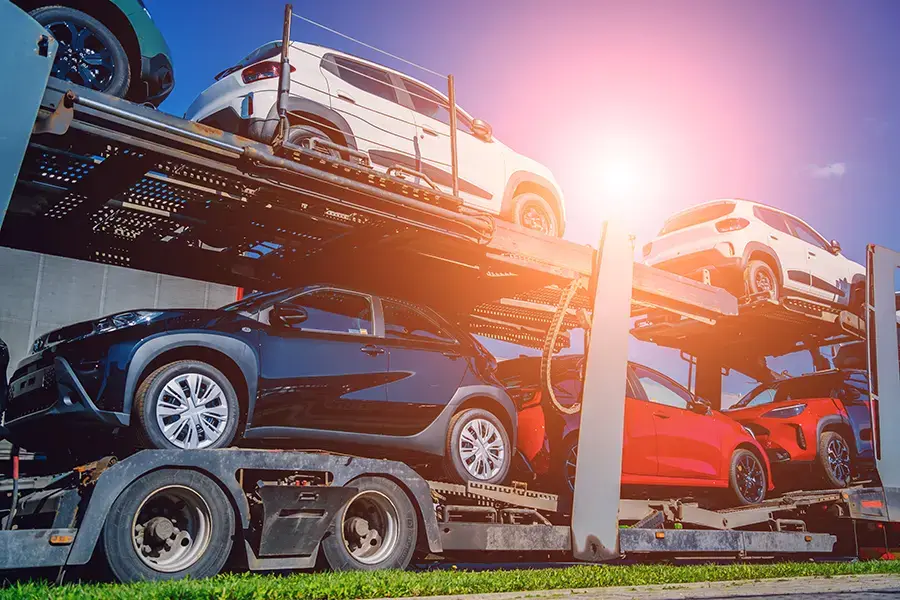
Registering Your Car in California (20-day rule, REG 343, VIN)
California rules for registering an out-of-state vehicle are straightforward as long as you have the proper documentation and follow the required procedures. Here are the key requirements:
- California residency: Only California residents can register a vehicle. Residency may be established through employment, voter registration, or having a child enrolled in school.
- 20-day registration deadline: You generally have 20 days after establishing California residency to register your out-of-state vehicle.
- Smog and emissions testing: First-time out-of-state vehicles may need to pass California smog and technical inspections through the California DMV. Certain EVs, pre-1976 gasoline vehicles, and qualifying diesel vehicles are exempt.
- Newer vehicle exemptions: California has an exemption for some newer gasoline vehicles, but it generally does not apply to vehicles being registered in California from out of state for the first time.
- County-specific smog rules: Smog requirements can vary by county. Some rural areas have exemptions from recurring testing, although these exemptions may not apply to first-time out-of-state registrations.
- VIN and safety inspection: The vehicle must undergo VIN verification and any required safety inspections through the California DMV or an authorized provider.
- Required documents: You’ll typically need your out-of-state title or registration, proof of California insurance, a valid photo ID, Form REG 343 (Application for Title or Registration), and an odometer disclosure. Lienholder information may also be required for financed vehicles.
- Registration fees: Fees vary depending on the vehicle’s value and weight, as well as the county where it is registered. The California DMV Registration Fee Calculator can provide a more accurate estimate.
- Late registration penalties: Missing the registration deadline may result in additional fees and registration complications. Driving an unregistered vehicle can also lead to citations or registration holds.

FasTrak, toll roads & Clean Air decals
California has an expansive toll roads system that allows participants to use priority HOV or carpool lanes. Up until September 2025, EVs and hybrids had an exemption for that rule, and single-participant drivers who had a CAV decal could use the HOV at discounted rates. As of 2026, all standard rules apply to all roadgoing vehicles, including clear air vehicles that now must pay the standard prices for all express lanes and bridges. Luckily, all of the old FasTrak CAV toll tags automatically convert to standard FasTrak Flex switchable converters. Now, EV owners are required to switch on the transponder to match the number of occupants in the vehicle in order to qualify for the regular carpool discounts. When transporting a car equipped with a FasTrak transponder, we recommend that customers switch it off or remove it to avoid unnecessary charges.

Mountain passes & winter routing
California has a diverse geographic landscape that can pose challenges to carriers and shippers going to or from the Pacific Northwest, such as high-elevation routes that use the I-5 over Siskiyou Summit or the I-80 that goes over to Nevada over Donner Pass. These routes are subject to sudden blizzards and black ice during the winter and may experience temporary closures. That is why carriers take extreme care when choosing the route and compare it to live data on road conditions and closures to not only ensure the safety of the cargo, but also to maintain a good timeframe for deliveries and pickups. Professional transporters will use the Caltrans QuickMap to track any existing chain requirements and monitor for pass closures before attempting the crossing.

Wildfire season and carrier availability
California wildfire season usually runs from June to November, and it poses some new challenges for both residents and carriers. For starters, carriers cannot enter evacuation zones and may be restricted in their access to certain locations due to smoke delays. The need for further local coverage stems from residents seeking to relocate their property and vehicles due to hazards. This causes further restrictions in carrier availability, which is why customers should be aware of major corridor closures like I-5, I-405, and the Pacific Coast Highway, as they can occur with zero notice.
Urban pickup in LA & SF what to expect
Both LA and San Francisco are notorious for their dense and slow-moving traffic, which means that planning the timing of your urban pickup in those areas will be very important. Experienced California car transport carriers will know how to navigate both the traffic and tight streets. San Francisco is known for its steep streets, which does pose some challenges for collection and pickup; luckily, as a part of our booking process, we always verify that the pickup or delivery address is accessible to the driver before we even dispatch the carrier. This reduces quite a lot of hassle later on and increases the speed and comfort of the service.
Best Time of Year to Ship a Car To Or From California
How to Prepare Your Car for Transport
FMCSA regulations require no more than ¼ of fuel in the tank. Curb weight is a big factor in shipping costs, and fuel weighs about 6 lbs per gallon; hence, less fuel means lower costs.
Consider the access to your vehicle. If you live in a neighborhood or an HOA community where commercial traffic is restricted, consider relocating the car to a better location. We will guide you and recommend a more suitable location nearby.
Be sure to secure a spare or valet key for your vehicle; the driver will need it, as constant access to the vehicle while underway is mandatory.
Don’t forget to remove any external accessories such as antennas, cargo carriers, and bike racks.
Please be sure your car’s battery is charged, all four tires are fully inflated, and headlights and taillights work.
If your car can’t start, run, steer, and stop under its own power, please let us know in advance. It’s not a problem, since we do ship non-running cars pretty frequently, but special arrangements have to be made.
How To Choose a California Car Shipping Company
It's important to know the difference between a broker and a carrier. SGT Auto Transport is a car shipping company in California, or a broker. We deal with carriers, vet them, and ensure they are regulated and insured. We provide an essential convenience and price affirmation service, which reduces the communication latency between customers and carriers. Carriers are responsible for the shipping process and rarely have the resources or time to properly service customers. To check whether a carrier or a car shipping company is licensed, you can use the FMCSA SAFER lookup portal to check the validity of a license. The lookup process is quite simple; all you have to do is:
- Open the portal by using this link;
- Go to the “Company Snapshot” in the main menu;
- You can choose three types of lookup: USDOT Number, MC/MX Number, or Company Name.
Review the snapshot results and note the operating status of the company - it is either “Active” or “Out-of-Service”. You can also check their safety rating, which can be “Satisfactory”, “Conditional”, “Unsatisfactory”, or unrated. Each status entails something about the company, with the most desirable service providers being in the “Satisfactory” category. You can also review the roadside inspection and crash summaries for the company, dating back to the previous 24 months. The report will also provide you with data about the type of insurance the operator currently has, its damage coverage, and further details.
Why Choose SGT for California Car Shipping
| SGT AUTO TRANSPORT | TYPICAL CAR SHIPPING COMPANY | |
|---|---|---|
| Deposit required to book | $0 - no deposit, you pay on delivery | 20% - 30% upfront deposit is common |
| Price match guarantee | Yes - we match any comparable written quote | Rarely offered |
| Quote validity | 7 calendar days, all-inclusive | Often an estimate that changes at dispatch |
| FMCSA credentials | MC 873392 / USDOT 2521690 | Varies - always check the SAFER portal |
| Customer rating | 4.7 out of 5 from 128,940+ customers | Varies |
| Carrier vetting | License, insurance and safety rating checked on every load | Varies |
| Support | 24/7 by phone, live chat and WhatsApp | Business hours |
| Cancellation before dispatch | Free | Deposit is often non-refundable |
| Hawaii car shipping | Yes, through partner RoRo carriers | Limited |
California Cities We Serve
We serve all major and minor city centers, towns, hamlets, villages, and locations accessible by roads. If your property is connected to the overall major network of the state, then we can reach you.
| CITY | ZIP AND SUBURB COVERAGE | WIDER REGION SERVED |
|---|---|---|
| Los Angeles, CA | Beverly Hills, Santa Monica, Glendale, Pasadena, Burbank, Culver City, Inglewood, West Hollywood, Torrance, Downey, Montebello, Monterey Park, Alhambra, South Gate, Bell Gardens | Orange County, Inland Empire, Ventura, San Fernando Valley |
| San Diego, CA | Chula Vista, El Cajon, La Mesa, National City, Santee, Poway, Encinitas, Carlsbad, Oceanside, Escondido, Vista, San Marcos, Solana Beach, Del Mar, Lemon Grove | Imperial County, coastal Orange County |
| San Francisco, CA | Daly City, South San Francisco, San Bruno, Pacifica, Millbrae, Burlingame, Brisbane, Colma, San Mateo, Foster City, Belmont, Redwood City, Sausalito, Tiburon, Alameda | East Bay (Oakland, Berkeley), the Peninsula, Marin |
| San Jose, CA | Santa Clara, Sunnyvale, Cupertino, Campbell, Milpitas, Los Gatos, Morgan Hill, Gilroy, Saratoga, Los Altos, Mountain View, Palo Alto, Fremont, Newark, Union City | Silicon Valley |
| Sacramento, CA | Elk Grove, Roseville, Rocklin, Citrus Heights, Folsom, Rancho Cordova, West Sacramento, Davis, Woodland, Lincoln, Auburn, Galt, Loomis, Fair Oaks, North Highlands | Central Valley (Stockton, Modesto) |
| Long Beach, CA | Lakewood, Signal Hill, Carson, Paramount, Bellflower, Cerritos, Seal Beach, Wilmington, San Pedro, Torrance, Compton, Hawaiian Gardens, Artesia, Norwalk, Lomita | South Bay, Port of Long Beach and Port of Los Angeles |
| San Bernardino, CA | Highland, Rialto, Colton, Loma Linda, Redlands, Fontana, Rancho Cucamonga, Ontario, Upland, Yucaipa, Chino, Montclair, Bloomington, Grand Terrace, Hesperia | Inland Empire, High Desert, Victorville |
| Fresno, CA | Clovis, Madera, Selma, Reedley, Sanger, Kerman, Kingsburg, Parlier, Fowler, Firebaugh, Coalinga, Mendota, Chowchilla, Dinuba, Hanford | Central Valley, nearby state routes |
| Bakersfield, CA | Shafter, Wasco, Delano, Arvin, Tehachapi, Lamont, McFarland, Taft, Ridgecrest, California City, Buttonwillow, Lost Hills, Maricopa, Rosamond, Mojave | Kern County, Tehachapi, the Grapevine and Lebec |
| Anaheim, CA | Orange, Fullerton, Garden Grove, Buena Park, Placentia, Yorba Linda, Stanton, Cypress, La Palma, Brea, Villa Park, Tustin, Santa Ana, Westminster, Fountain Valley | Orange County, Newport Beach, Costa Mesa, Irvine |
| Riverside, CA | Corona, Moreno Valley, Jurupa Valley, Norco, Eastvale, Perris, Grand Terrace, Colton, Loma Linda, Redlands, San Bernardino, Highland, Beaumont, Banning, Rialto | Inland Empire, Temecula Valley |
| Ventura, CA | Oxnard, Camarillo, Thousand Oaks, Simi Valley, Santa Paula, Fillmore, Ojai, Port Hueneme, Moorpark, Newbury Park, Somis, Piru, Oak View, Carpinteria, Montecito | Santa Barbara County, Naval Base Ventura County |
| Redding, CA | Anderson, Shasta Lake, Palo Cedro, Cottonwood, Red Bluff, Chico, Weaverville, Burney, Mount Shasta, Yreka, Susanville, Corning, Orland, Willows, Dunsmuir | Far Northern California, I-5 corridor to Oregon |

Car Shipping Quote
- Get your quote fast and simple
- Instant car shipping cost calculator
- High accuracy in price estimation
- Ship a Car to Another State Easy
Our ratings make us one of the best auto transport companies shipping in the California




We provide car shipping services to/from California, and across the country
Coast to coast, north to south, and anywhere else you need to ship your car


Car Shipping Quote
- Get your quote fast and simple
- Instant car shipping cost calculator
- High accuracy in price estimation
- Ship a Car to Another State Easy
Frequently Asked Questions about Car Shipping Services in California
What's the cheapest way to ship a car to or from California?
By far the cheapest way to ship a car to or from California is by choosing a shipping company that matches prices and has transparent pricing. Choose to book early, out of season, during a weekday, and away from Holidays.
Is my car insured during transport? (covers cargo insurance, carrier liability, gap coverage)
Yes, your vehicle is automatically insured during transportation, as all licensed carriers must have mandatory cargo and liability insurance, as set by the FMCSA. Your vehicle can be insured up to $250.000 for regular insurance, or it can get personalized coverage if its MSRP is over the maximum coverage of regular insurance.
Can I put personal items in my car? (the 100 lb rule, FMCSA household-goods restriction)
Yes, it is possible to put personal items in your car as long as they are secured inside the trunk of the car and do not obscure the visibility of the windows and side mirrors. As per the FMCSA household goods restrictions, customers are allowed up to 100 lbs.
Can I ship a non-running car to or from California? (inoperable vehicle, winch loading)
Yes, it is possible to ship a non-running vehicle from and to California. Inoperable vehicles require some extra effort to load and unload, and depending on their condition, might require winches or specialized hydraulic car loaders for vehicles that do not roll.
No, you do not have to be present at the pickup or delivery; you can specify a different individual as an authorized agent during the booking process. They can sign off on the vehicle for you and can make the appropriate inspections. They will be responsible for signing the Bill of Lading and finalizing any payments in cash depending on the type of payment method you have chosen.
Can I track my shipment?
Yes, it is possible to get updates on the location of your vehicle and the status of the shipment. You can also be connected to the driver and receive an update on his whereabouts once he gets close to the pickup or delivery location.
How do I pay deposit, cash on delivery, card?
The payment method you choose will depend on what you are most comfortable with. The cash on delivery method is suitable for customers who prefer the flexibility, but it does require a payment in cash or cashier’s check to the driver of the carrier. The credit card payment method may include a small discount on the initial price to incentivize customers to pay the full amount upfront.
How far in advance should I book California car shipping?
At least 1 week in advance at the minimum. California is one of the busiest states. It accounts for the majority of car shipping and delivery traffic. This means that you can get a shipment out, but if you want the lowest price, you should book in advance so the SGT team gets you a better offer.
What's the best time of year to ship a car to or from California?
In terms of getting the lowest price, it's September to October and January to February. In terms of getting the best experience and the most favorable weather windows, it's from February to May, and from September to November. The highest demand period is from the start of March to the start of September, and SGT Auto Transport sees up to a 30% increase in demand, which affects the cost of the service.
Door-to-door vs. terminal-to-terminal which do I need?
Choosing between the two is like choosing between convenience and a lower price. Here’s why. Door-to-door car shipping is one of the most convenient ways of shipping a car; you barely have to move it, and you get full control over where the car is delivered to. It can, however, increase the distance of the shipment and thus the cost. Terminal-to-terminal transportation can cost less, but it can require a bit more legwork.
Do I need a smog check if I ship my car into California?
If the vehicle is being registered in California after the delivery, then yes, you are required to. However, if the vehicle is temporarily staying in the state, you are not required to submit it to smog or safety testing, as long as you have a valid out-of-state tag and registration, you will be fine
Does California's CARB emissions rule affect my out-of-state vehicle?
Yes, all vehicles that are registered and operated within California must be submitted to a smog test and must comply with all CARB rules and regulations. They can differ from county to county and can be based on vehicle and fuel type. You can check the finer details on the official CARB Page.
Should I remove my FasTrak transponder before shipping?
Yes, you should to avoid unnecessary charges to your FasTrak account. Transport vehicles often pass along well-used freight corridors which use the FasTrak or equivalent systems.
How do I verify a California car shipping company is licensed? (FMCSA SAFER, MC number, USDOT number)
All car shipping companies, regardless of where they operate, must have an active license with the FMCSA and have an active MC and USDOT number. To check if a company is federally regulated, use the FMCSA SAFER portal and input the company’s public MC or USDOT number. If that information is not available, use their company name.
What's the difference between a broker and a carrier?
Carriers load, transport, and unload the cars, and brokers arrange the service for the customer and the carrier. Carriers oftentimes do not have a dedicated customer service center, which means that communication with them can be difficult. This is where brokers come in - they make it easier for regular people to contract carriers, and for carriers to find regular shipments to locations that best work for them.
Can you ship an EV to California?
Yes, you most certainly can. While shipping an EV can be a bit more expensive, any electric or hybrid vehicle is treated just like any other. Domestic transit will generally take 2 to 9 days and cost anywhere between $550 and $1390 depending on the total distance of the shipment.
How does shipping a car from California to Hawaii work? (Port of Long Beach, Port of Oakland, RoRo)
Shipping a car over water happens with a specialized vessel affectionately called a RoRo, which is a roll-on and roll-off vessel specifically designed to transport vehicles. SGT Auto Transport has partnered with several water transport services and can provide customers with access to nearby ports, such as the Port of Long Beach, Port of Oakland, the Port of San Diego, and more. We will arrange for the trailer to the port, and a RoRo to take your car to Hawaii.
What happens if my car is damaged in transit? (claims process, inspection report)
If you find damage on your car while it is still on the trailer, then you need to immediately note it in the Bill of Lading and take detailed photos. It helps if you have photos of the car before the shipment to use as a comparison. Make sure that the details are noted in the carrier’s copy of the Bill of Lading as well. Contact the carrier and get a claims form for their insurance provider. Note: your personal insurance will not cover damages during transportation; only a specific insurance type does, and the carrier has it. All claims are filed through the carrier’s insurance provider.