
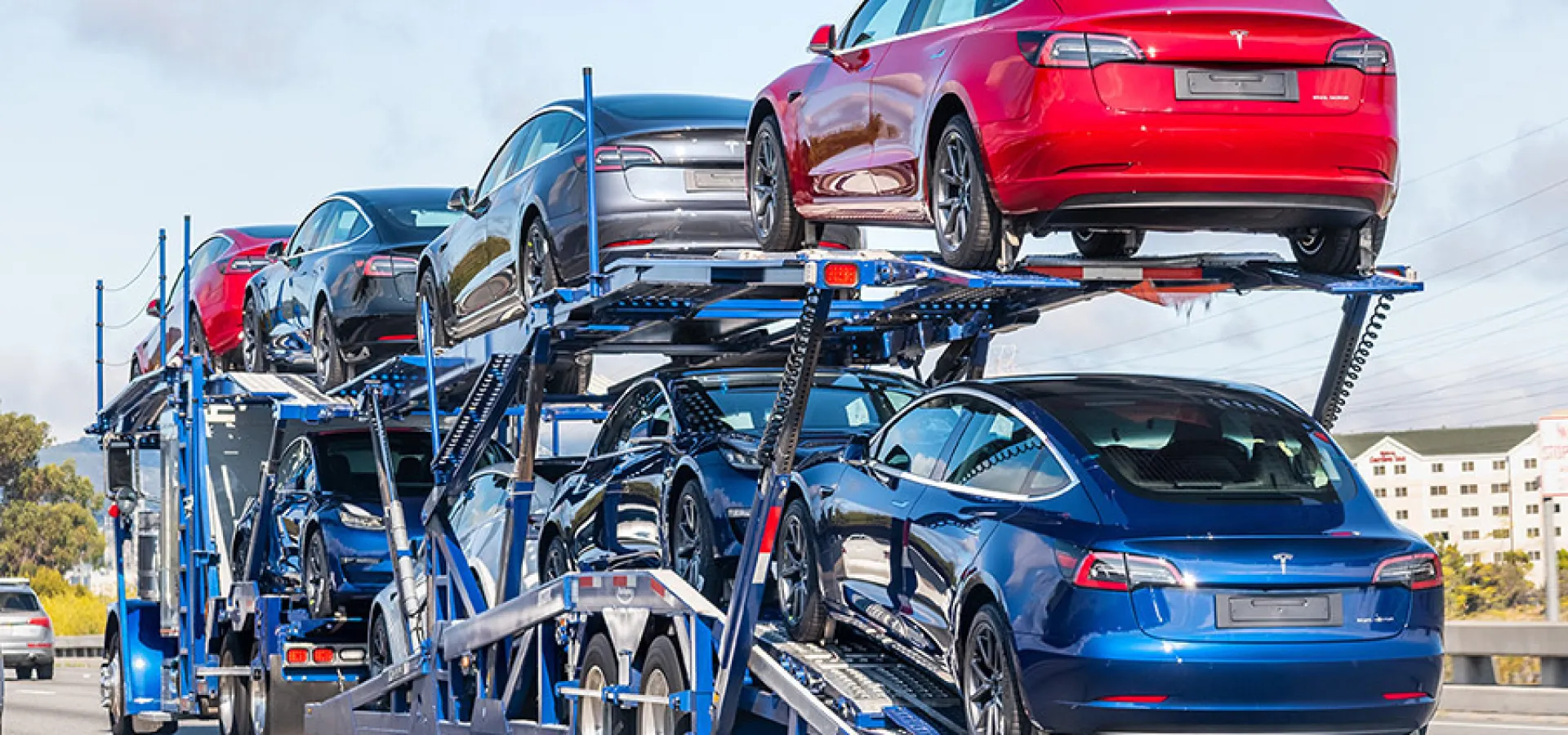
Shipping a car from Maryland to California costs $1,175 to $1,650 on an open carrier, covers roughly 2,660 miles, and takes 5 to 7 days on the road once a carrier collects it.
Key facts
Maryland to California open car shipping: $1,175 to $1,650
Enclosed transport: 37.3% over open
Distance: about 2,660 miles, Baltimore to Los Angeles
Transit: 5 to 7 days after pickup
Pickup: 1 to 3 business days from your first available date, or a 24-hour window with Guaranteed Pickup
California to Maryland, the reverse route: $1,275 to $1,850
California registration after a move from Maryland: within 20 days of residency, with a smog check
Maryland and California insurance minimums: both 30/60/15
How Much Does It Cost to Ship a Car from Maryland to California?
Shipping a car from Maryland to California costs $1,175 to $1,650 on an open carrier, and enclosed transport adds 37.3%. That works out to $0.44 to $0.62 per mile across roughly 2,660 miles.
Where you land in that range isn't negotiable. A running sedan collected in the Baltimore-Washington corridor, delivered to a Los Angeles suburb, booked three weeks ahead in February with a five-day window, sits at the bottom. A lifted pickup collected in Ocean City, delivered to a gated community in the Bay Area, booked four days out in July, sits at the top - same route, same rate card, roughly $475 apart.
Cost by Maryland and California city pair
| Route | Distance | Open | Transit |
|---|---|---|---|
| Rockville to Imperial Beach, California | 2,620 mi | $1,275 - $1,350 | 5-7 days |
| Baltimore to Los Angeles, California | 2,660 mi | $1,275 - $1,450 | 5-7 days |
| Annapolis to San Diego, California | 2,650 mi | $1,300 - $1,575 | 5-7 days |
| Gaithersburg to San Diego, California | 2,610 mi | $1,175 - $1,300 | 5-7 days |
| Baltimore to Beverly Hills, California | 2,660 mi | $1,375 | 5-7 days |
| Baltimore to Hacienda Heights, California | 2,640 mi | $1,325 - $1,650 | 5-7 days |
| Baltimore to La Jolla, California | 2,640 mi | $1,200 - $1,575 | 5-7 days |
| Baltimore to Pasadena, California | 2,630 mi | $1,325 - $1,425 | 5-7 days |
| Baltimore to Santa Rosa, California | 2,820 mi | $1,425 - $1,600 | 5-7 days |
| Bowie to Rancho Santa Margarita, California | 2,650 mi | $1,475 - $1,500 | 5-7 days |
| Ellicott City to Irvine, California | 2,640 mi | $1,275 - $1,325 | 5-7 days |
| Germantown to Los Angeles, California | 2,630 mi | $1,225 - $1,300 | 5-7 days |
| Middle River to Los Angeles, California | 2,670 mi | $1,250 - $1,400 | 5-7 days |
| Rockville to Los Angeles, California | 2,640 mi | $1,275 - $1,350 | 5-7 days |
| Baltimore to Sacramento, California | 2,730 mi | $1,250 - $1,500 | 5-7 days |
Prices are open-carrier ranges from SGT bookings from the last 6 months from the date of last modification, and include door-to-door service, carrier insurance, and fuel.

Car Shipping Quote
- Get your quote fast and simple
- Instant car shipping cost calculator
- High accuracy in price estimation
- Ship a Car to Another State Easy
Cost by vehicle type
The most commonly shipped car type from Maryland to California is the compact sedan, followed closely by the midsize SUV and the compact SUV.
| Vehicle type | Price range |
|---|---|
| Sedan Compact | $1,200 - $1,525 |
| SUV Midsize | $1,275 - $1,625 |
| SUV Compact | $1,250 - $1,625 |
| SUV Full-size | $1,275 - $1,625 |
| Sedan Midsize | $1,200 - $1,575 |
| Hatchback | $1,175 - $1,400 |
| Coupé | $1,225 - $1,650 |
| Sedan Full-size | $1,250 - $1,575 |
| Convertible | $1,250 - $1,600 |
| Station Wagon | $1,225 - $1,375 |
Cost per mile on a coast-to-coast lane, and why it falls as distance rises
At 2,660 miles, this route prices at $0.44 to $0.62 per mile, against more than three times that on a move under 500 miles, as the table below shows. Coast-to-coast is the cheapest mileage in auto transport.
| Distance band | Open, per mile | Enclosed premium |
|---|---|---|
| 100-499 mi | $1.85 | +21.3% |
| 500-999 mi | $1.15 | +28.0% |
| 1,000-1,499 mi | $0.83 | +34.1% |
| 1,500-1,999 mi | $0.76 | +38.9% |
| 2,000-2,499 mi | $0.59 | +37.3% |
| 2,500-2,999 mi | $0.53 | +37.3% |
What is included in your Maryland to California car shipping price
Every quote includes:
- Door-to-door pickup and delivery
- A verified carrier
- The carrier’s cargo insurance
- A pre-load inspection with a signed Bill of Lading
- The assigned carrier’s contact details
You can pay in either of two ways:
- In full, after carrier confirmation
- A partial payment by card when a carrier is assigned, with the balance paid in cash or by cashier’s check at delivery
Possible extra costs: a non-running vehicle (+15%), an oversized or modified vehicle, expedited dispatch, and a remote pickup address.
What Affects Your Maryland to California Price
Seven things move the price on this route: the month, diesel prices, your two addresses, the vehicle, whether it runs, your date flexibility, and carrier supply.
- Season: Late January to early March and late October through November are usually the cheapest windows, though winter weather on I-70 and I-80 can add transit days. From May through September, quotes sit at the top of the range.
- Diesel: A 2,660-mile run burns roughly 440 gallons, so a 30-cent change in diesel moves the cost of one load by about $130.
- Location: The Baltimore-Washington corridor gets trucks daily. The Eastern Shore and Western Maryland see fewer trucks, but a flexible window keeps their price the same. If an 80-foot truck can’t reach your street, the driver meets you at a nearby lot at no extra cost.
- Vehicle size and modifications: Larger and heavier vehicles cost more. Low splitters, low spoilers and aggressive camber may need a lift-gate carrier, so describe any modifications when you request a quote.
- Running condition: A non-running car needs a winch and more of the driver’s time, so it costs 15% more. Tell us its condition when you book.
- Date flexibility: A five-day pickup window lets us place your car on a truck already running the route, which is the easiest way to lower the price.
- Direction: California to Maryland runs $1,275 to $1,850, against $1,175 to $1,650 westbound. Carriers price the round trip, so the gap reflects how easily they find return loads.
How Maryland to California Car Shipping Works, Step by Step
Five steps from quote to delivery:
Step 1
Step 2
Step 3
Step 4
Step 5
Car Shipping Quote
- Get your quote fast and simple
- Instant car shipping cost calculator
- High accuracy in price estimation
- Ship a Car to Another State Easy
Maryland Pickup and California Delivery Areas
We collect from every part of Maryland and deliver across California. Timing depends on how many carriers run through your area and how easily a truck can reach your street.
| Area | Cities | Trucks available | Pickup or delivery window | What to expect |
|---|---|---|---|---|
| Baltimore-Washington corridor | Baltimore, Columbia, Silver Spring, Rockville, Bethesda, Bowie, Gaithersburg, Annapolis | Highest in Maryland | Shortest | Your car usually joins a truck already passing through, so quotes are the most competitive on the route. |
| Eastern Shore | Salisbury, Ocean City | Fewer | Slightly wider | It’s a detour across the Bay Bridge for a westbound truck. You may be asked to meet the driver at a more accessible spot. With flexible dates, it costs no more. |
| Western Maryland | Frederick, Hagerstown | Fewer | Slightly wider | The area sits off the main westbound freight flow. You may be asked to meet the driver at a more accessible spot. With flexible dates, it costs no more. |
| Southern Maryland | Waldorf | Moderate | Standard | It’s close enough to the corridor for standard pickup timing. |
| Dense California metros | Los Angeles, Long Beach, Anaheim, Irvine, Riverside, Oxnard, San Diego, San Francisco, Oakland, San Jose | Highest in California | Shortest | Access is the issue, not availability. An 80-foot truck can’t enter narrow streets or most gated communities, so the driver meets you at a nearby lot. That still counts as door-to-door service. |
| Central Valley, desert and Northern California | Sacramento, Fresno, Bakersfield, Palm Springs, and anywhere north of Sacramento | Fewer | Wider | Delivery is still door-to-door. An address far from the interstate may wait until the driver finishes nearer stops. |
Specialized Car Shipping on the Maryland to California Route
SGT Auto Transport ships more than standard sedans on the Maryland to California route, from EVs and classics to motorcycles and non-running cars.

Open car transport is a practical and budget-friendly choice for vehicle shipping. With fast transit times, flexible scheduling, and trusted service, it's no surprise that it's the preferred option for many of our customers.
Our cross-country car transport service offers a simple and convenient way to relocate your vehicle. From short interstate moves to coast-to-coast deliveries, we ensure your car reaches its destination safely and efficiently.
Choose our enclosed auto transport service when your vehicle deserves the highest level of protection. Enclosed trailers shield your car from weather, road debris, dust, and dirt, ensuring it arrives in pristine condition.
Whether you're relocating, buying, or selling a motorcycle, our reliable shipping service makes the process simple. We offer convenient door-to-door transport to ensure your bike arrives safely at its destination.
Need your vehicle picked up on a specific date? Our guaranteed car transport service is designed for customers with strict timelines, ensuring your vehicle is collected as scheduled and delivered with care.
Our college student car transport service makes it easy to bring your vehicle to campus. We pick up your car from your home and deliver it directly to your college, giving you the freedom and convenience of having your own transportation while you study.
Need to ship your vehicle on short notice? Our expedited car shipping service is designed for urgent situations, with vehicle pick-up available in as little as 1-2 business days, helping you stay on schedule.
Military relocations often happen with little notice, making dependable vehicle transport essential. Our military auto transport service supports active and retired military members by providing fast, secure shipping for PCS moves and other assignments.
How to Get the Lowest Price on This Route
California to Maryland: Shipping the Other Way
The eastbound leg runs $1,275 to $1,850, $100 to $200 above westbound, over the same 5 to 7 day transit.
The gap reflects return freight availability rather than distance, which is identical in both directions. If you are shipping both ways within the year, quoting them at the same time is worth doing.
Maryland to California Car Shipping FAQs
How much does it cost to ship a car from Maryland to California?
Shipping a car from Maryland to California costs $1,175 to $1,650 on an open carrier, based on SGT bookings from the last 6 months. The range covers all running vehicles, and enclosed transport adds 37.3%. The month, your two addresses and your date flexibility decide where you land in the range.
How long does it take to transport a car from Maryland to California?
The transit time is from 5 to 7 days from Maryland to California. Expedited service shortens dispatch to 1 to 2 days, but not the transit itself. The pickup window from the First Available Date is 1 to 3 days, and Guaranteed Pickup narrows it to a 24-hour window. The transit time depends on road conditions, the average speed limit on the route, weighing stations, the designated rest periods for each driver, and the workload for each driver along the way. If it's a particularly busy period, it's more likely that the car will be delivered to California closer to the 7-day mark.
What is the cheapest month to ship a car from Maryland to California?
The cheapest times to ship a car from Maryland to California are late January to early March and late October through November. The peak runs from May through September, when quotes sit at the top of the range. A five-day pickup window lowers the price in any month.
Do I need to be there for pickup and delivery?
You do not have to be present at either end. You can authorize an agent (a relative, a neighbor, a friend, a spouse) to sign the Bill of Lading for you, as long as you name them when you book. They must be at least 18 and should know how to inspect the car.
Can I leave personal items in the car?
You can leave up to 100lbs of personal belongings in your car, but they have to be inside a suitcase or a box inside the trunk of the car. If inside the cab of the car, they must be in the back seat and not impede the visibility from inside the vehicle; the front seats have to be clear of personal items. Do not leave valuable items, since standard cargo insurance provided by the carrier does not cover luggage and damage to personal belongings.
Is my car insured during transport?
Yes, from $100,000 to $150,000 for an open trailer, and from $250,000 to $3,000,000 with an enclosed trailer. The insurance covers damage from transportation up to the full amount; however, when shipping multiple cars at once, the coverage does not multiply or compound, but spreads over all vehicles. This means that if there’s an accident that affects all vehicles at once, and the amount of damage exceeds the total coverage, the balance that is left uncovered is left for the owner’s insurance.
How far ahead should I book?
For open car shipping, ideally 1-2 weeks ahead of time; for enclosed, 2-4 weeks in advance. The route is a cross-country route with a total distance of about 2,660 miles, which requires some amount of effort from the carrier. The more time you give us to find a good carrier, the more likely we are to get a reasonable rate.
Can you ship a non-running car?
Yes, SGT can easily help you arrange the shipping of a non-running car. There are specialized carriers who can accommodate cars that do not roll, start, or have operational brakes. To start the booking process, you have to specify that your vehicle is inoperable and provide the level of inoperability. Failing to disclose the state of the car properly can result in a canceled booking from the carrier curbside.
Can you ship an electric vehicle?
Yes, you can. The cost difference between a regular car and an EV is 10% to 30% higher due to the extra weight and not a hazard tax. EVs are most commonly shipped in enclosed trailers as they protect the vehicle from damage over the entire length of the trip. EVs can safely be shipped on open trailers, but a lot of car owners prefer to protect the car from road spray and debris, considering the price premium they have paid for the car in the first place.
Is it cheaper to drive or ship?
It would roughly cost anywhere from $920 to $1,265 to drive from Maryland to California, not considering the added wear to the car, whereas it would cost you $1,175 to $1,650 to ship with an open-air car trailer. The cost difference isn’t that great, and it even overlaps. Considering that your time is valuable, it would make a lot more sense to ship the car rather than drive it because it's also safer for you and the vehicle, and it gives you back the 4-6 days it would take you to make the trip.
How do I know a company is legitimate?
You can check through the FMCSA SAFER company snapshot portal using the MC number, USDOT number, or company name. The company should be active; their authority should be either a broker, a carrier, or a combination; their insurance should be valid and up to date on FMCSA's Licensing and Insurance site, with coverage suited to the type of shipping they do, and they should disclose this information easily when asked.
What happens if my car is damaged?
You file an insurance claim with the carrier’s insurance provider, providing proof of the damage, like comparison photos prior to and after the trip, and a signed Bill of Lading with details of the car’s pre- and post-trip condition. The BOL should be signed by both the owner and the driver of the carrier. Federal law gives you at least 9 months from delivery to file, but report the damage to the carrier and SGT the same day.
Will my car be transferred between trucks?
Your vehicle can be transferred between trucks for several reasons. Some carrier companies use different trucks for different lines. This type of transfer is called logistical staging and is used to optimize the routing. Another reason your car can be transferred to a different truck would be an issue with the initial one. You will be notified of the change ahead of time if it's planned, and immediately after if it is not a planned transfer.
Do I have to smog my Maryland car in California?
Yes, you need to smog test your vehicle within 20 days of establishing residency in California, which can be after gaining employment, enrolling a child in school, or getting an address. The smog test applies to most vehicles, with a few exceptions, such as EVs, gasoline vehicles from 1975 and earlier, and diesel vehicles from 1997 and earlier or over 14,000 lbs. California has no safety inspection, but you need the smog check and a VIN verification, and you need to apply at your local DMV, handing over your old Maryland registration.
External Sources
- California DMV. “California Driver’s Handbook: Vehicle Registration Requirements”. https://dmv.ca.gov/portal/handbook/california-driver-handbook/vehicle-registration-requirements/.
- California DMV. “How to Register an Out-of-State Vehicle”. https://dmv.ca.gov/portal/file/how-to-register-an-out-of-state-vehicle-htvr9.
- California DMV. “Buying a Vehicle from Out of State: Can You Register It in California? (FFVR 29)”. https://www.dmv.ca.gov/portal/driver-education-and-safety/educational-materials/fast-facts/buying-a-vehicle-from-out-of-state-can-you-register-it-in-california-ffvr-29/
- Retrieved California Bureau of Automotive Repair. “Smog Check”. https://www.bar.ca.gov/smog-check.
- California Air Resources Board. https://ww2.arb.ca.gov/.
- California Department of Insurance. “Bulletin 2023-1, SB 1107 Minimum Liability Limits”. https://www.insurance.ca.gov/0250-insurers/0300-insurers/0200-bulletins/bulletin-notices-commiss-opinion/upload/bulletin-2023-1-re-sb-1107-final-003.pdf.
- California Legislative Information. “SB-1107 Insurance: Motor Vehicle Liability Insurance (2021-2022)”. https://leginfo.legislature.ca.gov/faces/billNavClient.xhtml?bill_id=202120220SB1107.
- Maryland MVA. “Returning Maryland License Plates”. https://mva.maryland.gov/title-registration/license-plates/returning-your-license-plates.
- Maryland Insurance Administration. “A Consumer Guide to Auto Insurance for Teen & Young Adult Drivers”. https://insurance.maryland.gov/Consumer/Documents/publications/teenautoinsguide.pdf.
- U.S. Energy Information Administration. “Gasoline and Diesel Fuel Update”. https://www.eia.gov/petroleum/gasdiesel/.
- FMCSA. “Summary of Hours of Service Regulations”. https://www.fmcsa.dot.gov/regulations/hours-service/summary-hours-service-regulations
- FMCSA. “SAFER Company Snapshot, SGT Auto Transport (USDOT 2521690)”. https://safer.fmcsa.dot.gov/query.asp?searchtype=ANY&query_type=queryCarrierSnapshot&query_param=USDOT&query_string=2521690.