


In 2025, the changing federal policies, increased competition, and pressure on prices did not obstruct electric autos’ gaining popularity in the USA. At the beginning of 2026, the expiry of federal EV tax incentives created temporary instability. Americans are still buying more electric vehicles than they did several years ago. Despite all difficulties, today these autos are in demand. The 2025 record sales, lower battery rates, and the advanced charging network prove this.
Industry analysts believe that the US electric vehicle market is in transition from incentive-driven growth towards consumer-driven expansion. EV adoption no longer relies mainly on government subsidies. It is supported by lower operating costs, higher model variety, improved technologies, and other factors. Presently, electric vehicles fit surprisingly well in US drivers’ daily habits.
Do you wonder what stimulates EV adoption in 2025 and 2026? Here are some key factors:
- Consumers now have access to more electric models in almost every price range than before.
- You can now easily find affordable compact SUVs, luxury pickups, and performance sedans.
- Charging networks have increased and expanded substantially
- EV ownership is much more practical for households with concerns about range limitations.
- Becoming more familiar with the EV technology seriously changes buyers’ behaviours.
- There’s increased competition among automakers
Almost every major manufacturer now offers electric vehicles in many different categories. This creates higher pressure on costs and more choices available to buyers than ever before.
Only a few years ago, electric vehicles were entirely niche products for early adopters. Today, EVs are gradually turning into mainstream purchases for families and commuters. They are preferred by used-car buyers who look for reduced long-term ownership costs.
Why the EV Market Is Growing Even Without Perfect Policy Support
The American EV market used to be supported solely by federal incentives. Here are the present main factors for the long-term EV market growth:
- product quality
- battery improvements
- charging infrastructure
- ownership savings
Even after policy changes, which took away some purchase incentives, electric vehicle adoption did not stop. The industry began adapting to a more competitive market. Currently, financing, costs, and ownership economics are much more important than subsidies alone.
EV demand is already strong enough to resist the policy’s ups and downs. Consumers no longer assess EVs according to the incentives they can get. They focus more on long-term savings and functionality.
What Record Sales Say About Consumer Demand
Steady 2025 sales showed that when costs are low, EV consumer demand gets high. Many drivers rushed their purchases before the end of federal incentives. This created record sales in electric cars.
That spike in EV trade showed several things:
- People love electric vehicles
- Drivers are very price-sensitive
- More affordable monthly payments cause demand to soar very quickly
Record sales in electric vehicles proved that adoption is not generated only by innovator drivers and seaside states. EVs are highly approved by mainstream buyers, reaching suburban and middle US markets.
EV Sales in 2025-2026 Broke Records Before the Credit Expired
Months before the federal EV tax credit ended, an immense interest was created among consumers. Drivers wanted to get the offered savings before the deadline. Analysts described this as a classic “pull-forward” effect: buyers make purchase decisions earlier to gain incentives.
Automakers had strong showroom traffic during this time. A few ot them reported about uncommonly high EV demand at the end of 2025. But industry observers warned that the market could cool abruptly after the subsidy expires. This turned out to be accurate.
2025 became one of the strongest years for the USA’s EV sales. But the market felt a serious slowdown once the incentives ended, which showed how significant consumer interest in EVs has penetrated the industry.
What Happened After the Federal Tax Credit Ended
After the expiration of the federal clean vehicle credit, the increase in EV sales was postponed. More effective purchase prices urged some drivers to delay buying or return to gasoline-powered vehicles, especially in the more price-sensitive market segments.
This downturn wasn’t a collapse in demand. The market is not vanishing, just adjusting. At the beginning ot 2026, EVs continued to be a substantial share of all new vehicle sales. EV demand is still surging even without any federal support.
What Early 2026 Sales Signals Mean for the Market
Sales statistics from 2026 reveal that in the post-adaptation period, the EV market may become more stable. Consumers are getting used to the new prices as sales keep balancing out.
Electric vehicles still have an immense long-term appeal even without federal subsidies. During the stage of fluctuating gas prices, people focus on the lower operating and fuel expenses and the modern technology.
More industry critics expect the future EV growth to get steadier and more gradual compared to the explosive expansion from earlier years of the decade. Simply put, the market may become more sustainable even if growth rates are no longer so dramatic.
Why EV Prices Matter More Than Ever
Do you know what the main stumbling blocks are that have impeded EV adoption in 2025 and 2026? High EV prices. With no federal tax credits to cut on car purchase expenditure, drivers can now compare EV sticker prices with those of traditional gas vehicles more clearly.
Electric vehicles’ prices are another big concern. Many US families pay more attention to their monthly payments than to their long-term savings from EVs. The high interest rates prevent automakers from offering competitive EV financing and lease deals. They re-evaluate their pricing strategy, production costs, and vehicle trims. The companies that effectively cut their auto prices without sacrificing range and quality will probably become highly successful in the next couple of years.
How Lower Battery Costs Are Changing the Market
The discounted battery rates are essential for making EVs budget-friendly. Lithium-ion batteries’ costs gradually fell thanks to:
- The manufacturing scale
- The improved supply chains
- The improvement in battery chemistry
One of the most expensive parts of premium electric vehicles is the batteries. Thanks to their decreased price, automakers can cut down their vehicle expenses or boost profits. Battery rates may continue to decrease in the following years, which would make EV expenditure similar to that of gas-powered vehicles.
Cost-effectiveness is one of the major barriers to embracing entry-level EVs. That’s why price discounts are so crucial. The improved battery technology has made electric cars financially accessible.

How Automakers Are Using Price Cuts to Keep Buyers Interested
Car manufacturers attract buyers by offering many financing deals, price rebates, lease incentives, and more affordable trim options. Several of them have reduced the prices of some of their major EV models to keep consumers interested.
Leasing has become a crucial tool, offering users lower monthly payments without worrying about the rapidly developing technology or the long-term battery depreciation. Competitive lease offers help many drivers buy electric vehicles for the first time.
Meanwhile, manufacturers continue to release more affordable electric crossovers and compact SUVs for mainstream buyers. All these pricing strategies help the EV market avoid a more drastic slowdown.
Why Total Cost of Ownership Still Favors EVs
Electric autos may often be more expensive, but in most cases, their total ownership expenditure is more favorable.
EV owners can save thousands of dollars over time from:
- Lower fuel costs
- The simpler mechanics of the vehicle
- Fewer maintenance requirements
Unlike gasoline cars, electric vehicles don’t require any oil changes. EVs usually get less wear on brakes, thanks to their regenerative braking systems. In many parts of the USA, electricity costs per mile also remain lower than gasoline expenses.
These savings can compensate for a substantial share of EVs' higher purchase price. This is one of the strongest long-term arguments for the present electric car adoption.
How Fuel and Maintenance Savings Offset the Higher Sticker Price
The main financial edge of owning an EV is its reduced maintenance and fuel costs. Drivers who travel often pay less than owners of traditional gas autos. EVs’ fewer moving parts lower their total maintenance expenses. This eliminates many of the common service requirements typical of combustion engines. The overall savings get significant over time. Electricity rates are more stable than gasoline prices. That’s why EV owners can easily predict their total long-term operating expenditure.
Why More Americans Are Comfortable Going Electric
In the last decade, user attitudes to electric vehicles have drastically shifted. EVs are no longer considered limited-use commuter or experimental products. What has made them a magnet for mainstream drivers? A couple of factors, namely:
- Their excellent range
- Reliability
- Charging improvements
- Great variety
The public charging network is one of the main psychological barriers for people to embrace electric vehicles. It has also expanded a lot so that owners can easily find stations in numerous locations. These are apartment complexes, trade centers and malls, office premises, and highway travel corridors.
Social familiarity is another highly influential factor. An increasing number of family members, friends, neighbours, and people now possess EVs. Recently, the technology has become less unusual, risky, and strange to all than it used to be.

How EVs Fit Daily Driving Patterns in the US
Americans find electric autos exceptionally convenient. Modern EVs are perfect for most daily trips that include commuting, school drop-offs, errands, and local travel.
Many drivers can home charge their autos and start their day with a full battery, without having to visit a gas station. This convenience greatly improved the whole ownership experience. Families with predictable driving routines value it a lot.
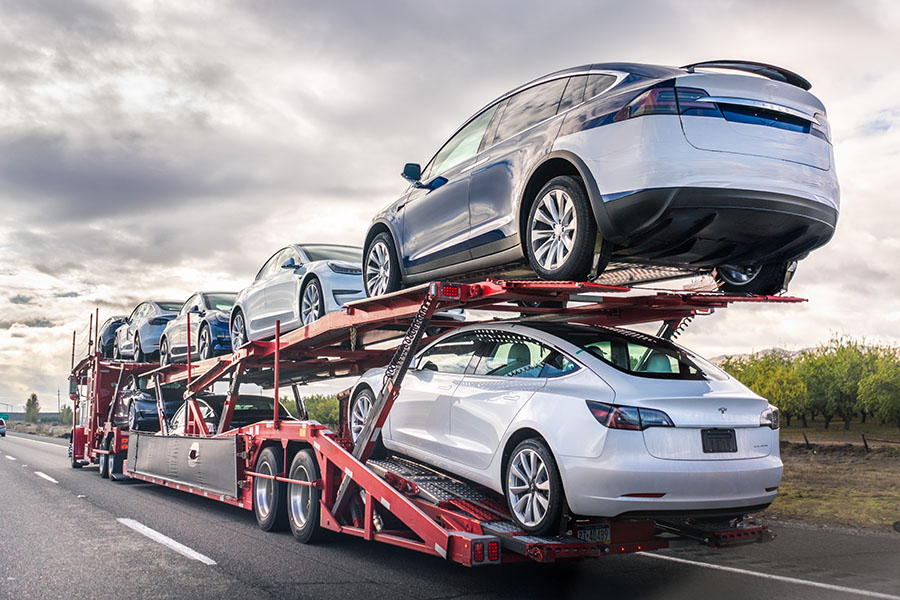
EVs are handy for all kinds of purposes. They impact other industries, like the auto transport services. With the rise in the number of Americans relocating to other states, buying EVs on the Internet, and shipping electric autos, the demand for transportation companies also increases. Auto brokers familiar with EV functioning, charging during transit, and battery issues offer reliable shipping services.